
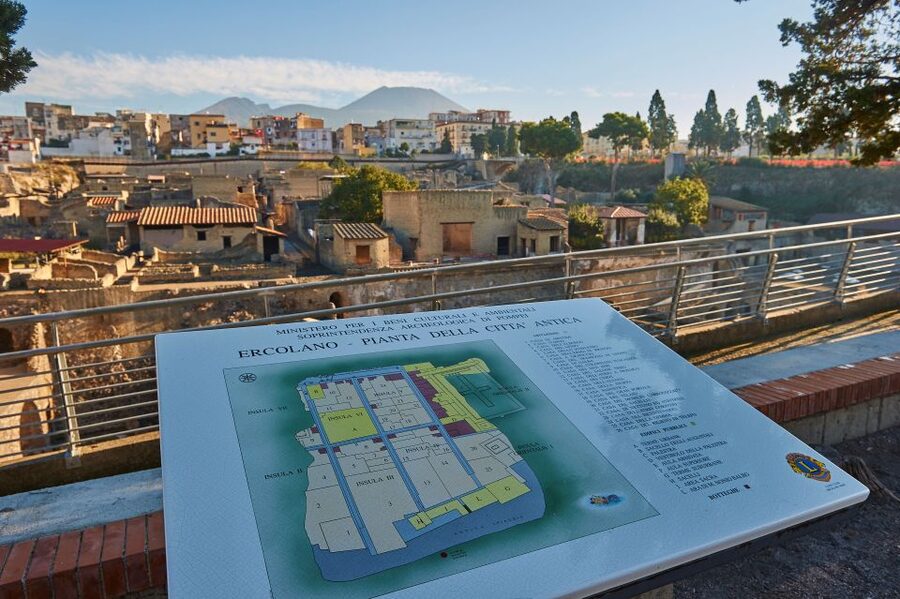
REVIEW · HERCULANEUM TOURS
From Sorrento: Half-Day Tour of Herculaneum
Herculaneum gives you something Pompeii cannot: an unusually intimate look at Roman home life, preserved beneath volcanic mud and ash after Vesuvius erupted in 79 A.D. Original timbers, clay pots, mosaics, frescoes, and entire streets remain in place, making the ancient town feel startlingly close.
I like the short coach ride from Sorrento, which saves you from dealing with the local railway, and I like the English-speaking guides, who bring daily Roman life into focus rather than simply pointing at ruins. The main drawback is time. Four hours includes transport, and the guided visit lasts about an hour, leaving only limited time to explore on your own.
Key points
- Original wooden beams and window frames survive in several buildings, an unusual sight at an ancient Roman site.
- The Villa of the Papyri reveals the wealth and taste of Herculaneum’s elite residents.
- The Central Thermae includes frescoes, mosaics, and a clear look at Roman public bathing.
- A coach from Sorrento keeps the day simple and avoids the area’s often slow railway journey.
- Recent guides have included Eugene, Toni, Cynthia, and Dana, with strong praise for clear explanations and local stories.
- Independent time is limited, so this works best if you want an introduction rather than a full archaeological study.
Why Herculaneum feels different from Pompeii
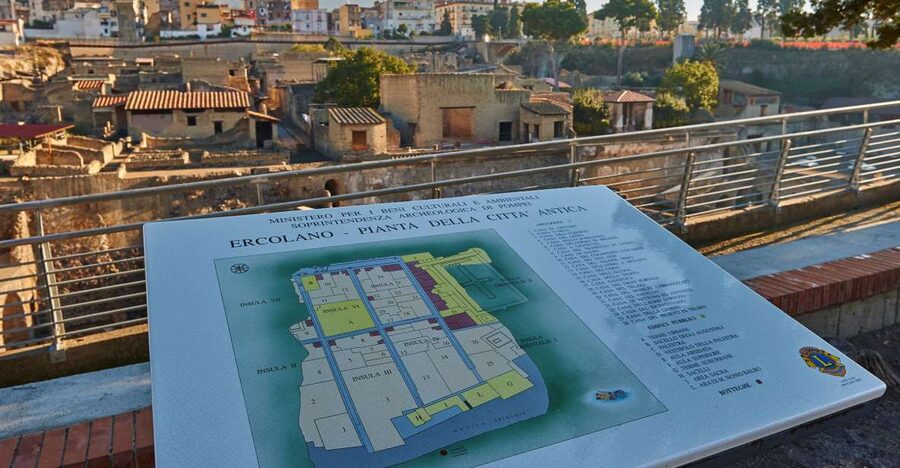
Herculaneum was a residential coastal town, smaller and more compact than Pompeii. It was buried by hot volcanic mud and ash, which sealed many buildings and household objects in place. That material helped preserve wooden beams, doors, window frames, clay containers, wall paintings, and floor mosaics.
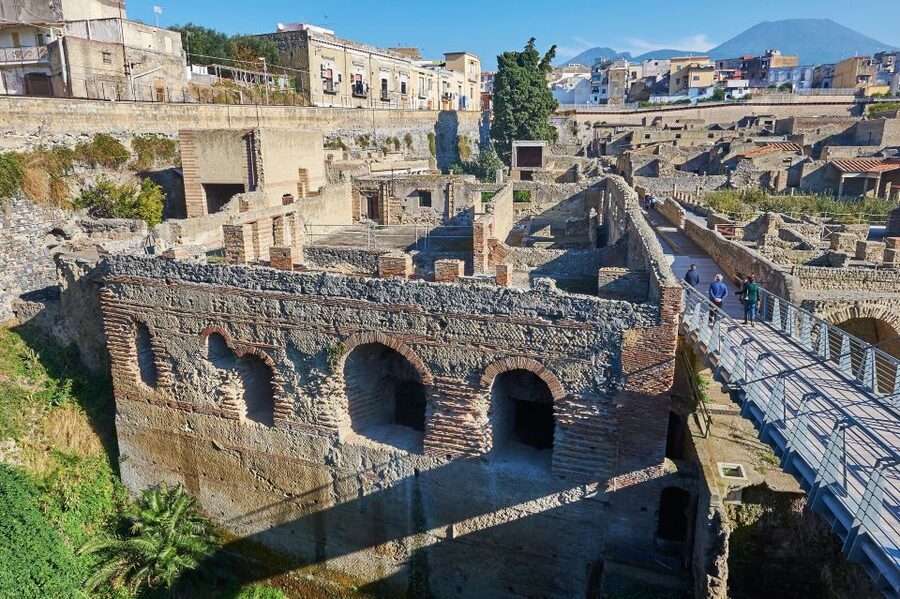
The result is not simply a field of broken columns. You walk along Roman streets and look into homes, shops, baths, and public buildings. The streets are still laid out much as they were 2,000 years ago, so the site gives you a strong sense of how people moved through the town.
The eruption did not affect every resident in the same way. Many inhabitants appear to have escaped, while others died near the shore and in the boat houses. Skeletons remain at the site, adding a sobering human element to the visit. This is not just a pleasant walk through old architecture. You are also looking at the final moments of a real community.
I find Herculaneum especially rewarding if you enjoy details at eye level. A carbonised timber beam or a row of clay pots can tell you more about ordinary life than a grand monument viewed from a distance. You get a close look at how Roman people stored goods, used public baths, decorated rooms, and organized their homes.
More Herculaneum tours from Sorrento:
- Guided Day Tour of Pompeii and Herculaneum with Light Lunch
★ 4.5 · 311 reviews - Sorrento: Pompeii & Herculaneum Tour with Skip-the-Line
★ 4.6 · 125 reviews - Pompeii, Herculaneum and Winery on Vesuvius with an Archaeologist
★ 5.0 · 89 reviews
Leaving Sorrento at 8:10 in the morning
The meeting point is the Achille Lauro parking area, opposite the Europa Palace Hotel. The stated departure time is 8:10 a.m., so arrive early and keep the location details handy. The coach travels toward Castellammare, joins the motorway there, and continues toward Naples before reaching Herculaneum.
The bus is a practical part of the package. You do not need to work out the railway connection or make your own way across the busy area around Naples and Mount Vesuvius. That convenience has real value, especially if you are staying in Sorrento and want to fit Herculaneum into a single morning.
Allow extra patience for traffic. One departure arrived about 30 minutes late for pickup, and another was slowed by road congestion. That is not a reason to dismiss the tour, but it is a reason not to schedule a tight flight, ferry, or lunch reservation immediately afterward.
Headsets are provided on the coach and used during the journey and site visit. They help you hear the guide without needing to crowd around. One technical complaint involved headsets losing connection from time to time, so do not be surprised if the sound needs a quick adjustment.
Seeing the site from above before walking in
At Herculaneum, you first have a view down over the excavated town. This opening perspective helps you understand the site’s shape before you enter the streets. From above, the remains look like a compact Roman neighborhood cut into the earth, with blocks of buildings arranged around narrow roads.
Your guide handles the beginning of the visit, including the entrance process. The activity information lists the Herculaneum entrance fee as included. It also gives the standard admission price as €11, with free entry for children under 18 and adults over 65.
The guided portion lasts about an hour. That is enough to introduce the most important buildings and explain how the eruption preserved them, but it is not enough for a slow examination of every room. The guide keeps the group moving, which helps you see the main sights but can feel brisk if you want to stop at every mosaic.
The Villa of the Papyri and Roman luxury
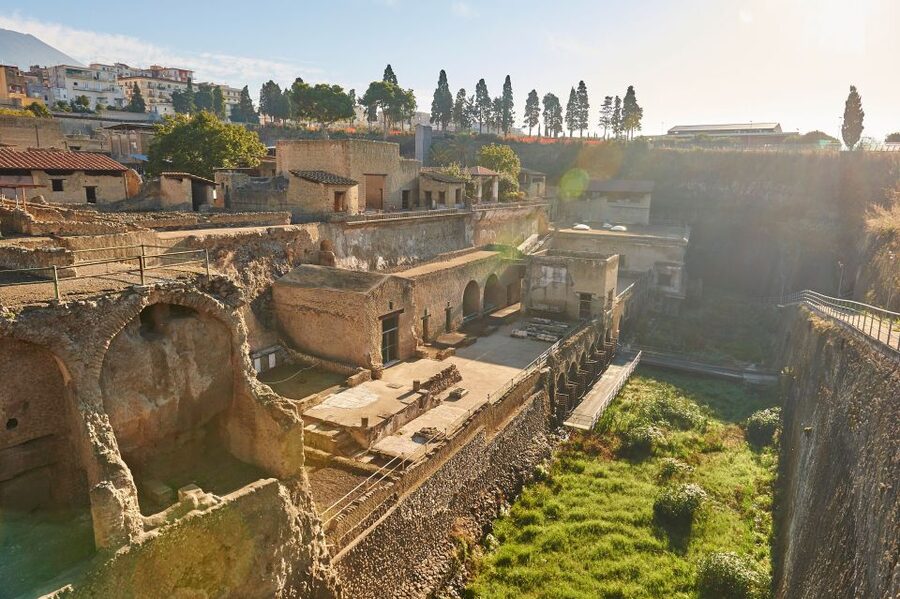
The Villa of the Papyri is one of the major stops. It was a large, luxurious residence associated with the town’s wealthier class. Its name comes from the papyrus scrolls found there, an important discovery that points to the intellectual life of the household.
The villa helps explain that Herculaneum was not only a town of modest homes and shops. Some residents had the money to build grand houses, decorate them with art, and collect books. The villa’s scale and design give you a sharp contrast with the smaller commercial spaces along the streets.
You should listen closely here for the guide’s explanation of how elite Roman homes were organized. The value of the stop is not only the surviving architecture. It is the glimpse into social differences within the town, with wealthy householders living alongside shopkeepers, workers, and bath users.
Because the visit is short, you may not have time to study every feature of the villa at leisure. If this is the part of Herculaneum you care about most, stay near the guide and save your own time for a closer look after the formal tour.
A few more Sorrento days worth comparing
- Pompeii Ruins Half-Day Tour from Sorrento with Guide
★ 4.0 · 714 reviews - From Sorrento: Pompeii Half-Day Skip-the-Line Tour
★ 4.6 · 541 reviews - Half-Day Small Group Trip to Capri & Blue Grotto from Sorrento
★ 4.5 · 78 reviews - Sorrento: Half-Day Pizza Making, Wine, Limoncello & Pick-Up
★ 5.0 · 20 reviews
Frescoes and mosaics in the Central Thermae
The public baths, known as the Central Thermae, are another key stop. Roman baths were not simply places to wash. They were social spaces where people met, relaxed, and followed familiar routines of public life.
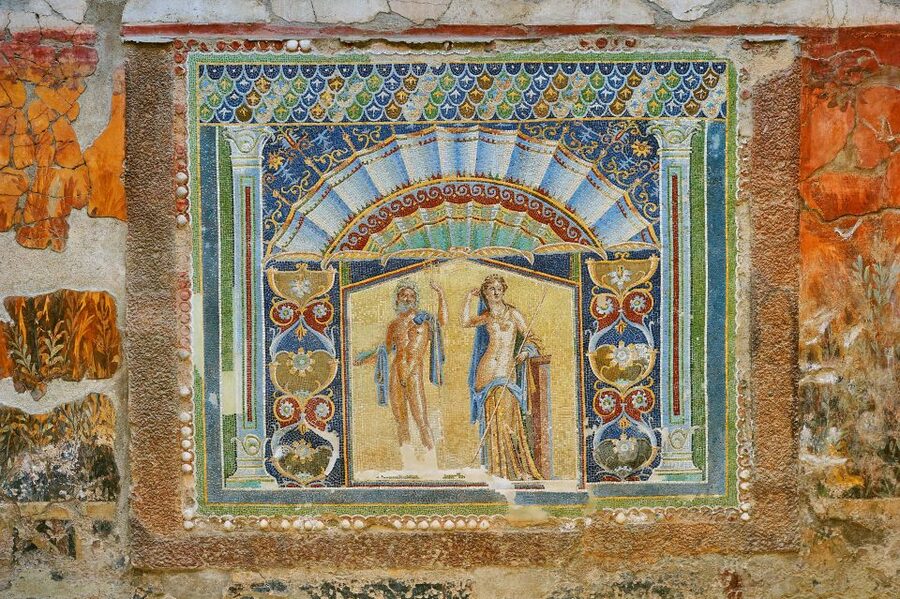
Here you can see art on the walls, along with mosaics and architectural details that show how carefully the baths were decorated. The remains help you picture a working public building rather than a silent ruin. Your guide can connect the rooms to Roman customs and explain how the baths fit into the town’s daily rhythm.
The baths are a good example of why an informed guide matters. Without context, a decorated room can look like another attractive ruin. With an explanation of its use, the frescoes and mosaics become part of a larger picture of public life, status, and routine.
The tour moves at a steady pace, and summer heat can make that pace feel demanding. There is little shade in parts of the archaeological site, so bring water and wear a hat if you are visiting in warm weather. The information supplied for the tour does not list lunch, so plan to eat after the excursion rather than expecting a meal during it.
Walking streets preserved for 2,000 years
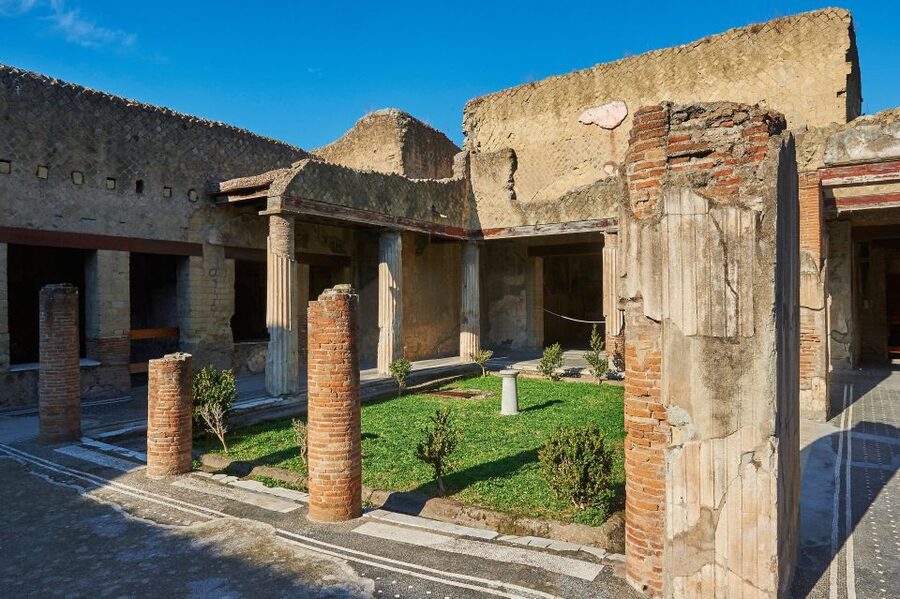
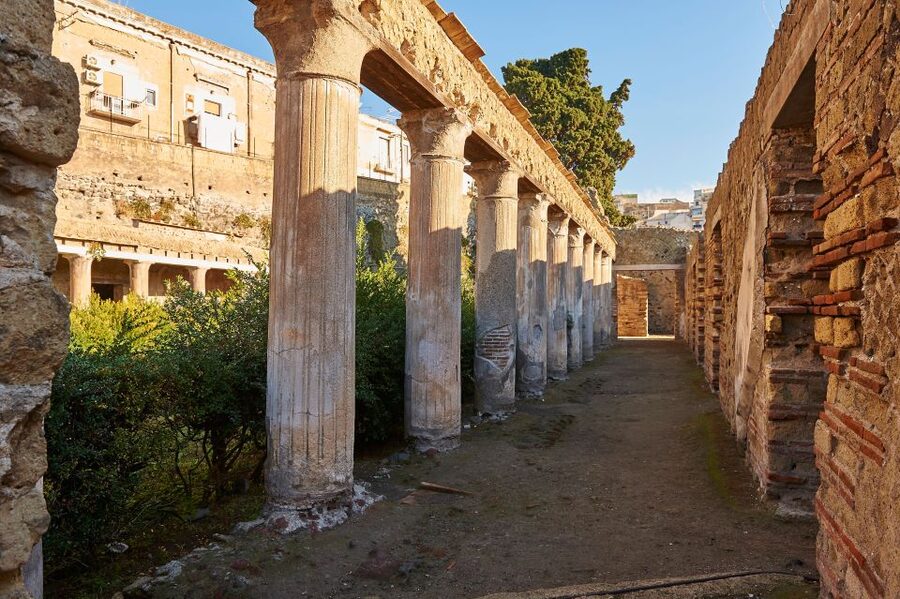
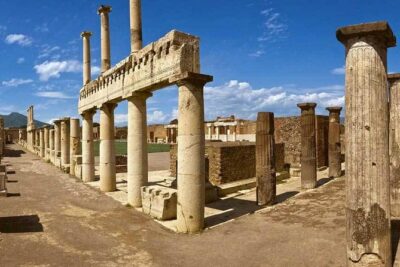
The streets are the heart of the visit. You walk along the same routes used by Roman residents, passing doorways, shops, houses, and public buildings. The preserved street plan makes Herculaneum easier to understand than many ancient sites where only isolated monuments remain.
Look down at the floors and across at the walls. Original hand-laid mosaics survive in some interiors. Clay pots remain stored much as they were before the eruption, and carbonised wooden beams show that Roman construction relied on timber more extensively than surviving stone ruins might suggest.
The details are often small, but they are powerful. A beam tells you how a roof or upper floor was built. A pot hints at storage and trade. A mosaic suggests the owner’s taste and means. A shop opening onto a street shows how work and home life often shared the same neighborhood.
This is where the tour feels most authentic. You are not just viewing an isolated temple or a reconstructed monument. You are moving through a place designed for ordinary life, with homes, shops, baths, and public areas close together.
Skeletons, escape, and the human cost of the eruption
Herculaneum includes surviving skeletons, particularly in areas connected with the waterfront. They remind you that the town’s preservation came at a terrible cost.
It is thought that many people escaped Herculaneum, unlike those who were less fortunate in Pompeii. That does not make the site less serious. The remaining evidence shows that some residents were trapped, and the preserved buildings leave you facing the sudden end of a functioning town.
The guide’s storytelling is valuable here. Eugene, Toni, Cynthia, and Dana are among the guides associated with recent departures, and each was praised for clear English, strong explanations, or a friendly manner. Guides can change, but the best ones make the ruins easier to read without turning the visit into a lecture.
Expect a respectful tone around the skeletons. Herculaneum is fascinating, but it is also a place of death. The contrast between colorful walls, family homes, and the remains of people caught by the eruption gives the visit much of its emotional weight.
How much time you really get
The total activity lasts four hours, but that includes the journey from Sorrento and back. The formal archaeological tour takes about one hour, followed by some time to look around independently. One recent departure allowed roughly half an hour for personal exploration, while the activity description generally presents the visit as a half-day outing.
That distinction matters. You will see the principal highlights, but you should not book this expecting several quiet hours among the ruins. The site contains more buildings and details than a short guided visit can cover.
I suggest deciding in advance what you care about most. If it is the Villa of the Papyri, stay focused during that section. If it is Roman domestic life, pay close attention to the houses, kitchens, shops, and preserved wood. If you want photographs, use your independent time for the areas not covered by the guide.
The compact site is manageable, which helps on a hot morning. Still, heat and walking can make the experience tiring, particularly when traffic has shortened the time available at the site. Comfortable shoes, water, and sun protection are sensible choices.
Is $71 a fair price?
At $71 per person, the tour is priced above the cost of entering Herculaneum independently, but you are paying for more than the ticket. The package includes bus service, an English-speaking guide, and the Herculaneum entrance fee. It also removes the need to plan the route from Sorrento and deal with the local railway.
That makes the price reasonable for anyone who values convenience and a guided introduction. You are buying a simple morning plan, transport, and explanations from a local guide. The value is strongest if you would otherwise feel unsure about reaching the site or understanding what you see.
The calculation is less favorable if you want a long, unhurried visit. An independent visit would give you more control over pacing, though you would need to arrange transport and make your own way through the ruins. This excursion is best understood as a well-organized first look, not a full archaeological day.
Children under 18 and adults over 65 are listed as free for general admission, but the tour price and booking conditions should still be checked for your party. The activity also offers free cancellation up to 24 hours before departure and a reserve-now, pay-later option, which can help if your Sorrento schedule may change.
Who should choose this Herculaneum tour?
I would choose it for a first visit from Sorrento, especially if you want Herculaneum without giving up an entire day. It suits you if you prefer a guide who explains what you are seeing and a coach that takes care of the route.
It is also a good fit if you have already seen Pompeii and want a different view of Roman life. Herculaneum’s smaller scale, preserved wood, intact decoration, and residential character make it feel distinct rather than like a repeat visit.
Families may appreciate the short format, though children who need frequent breaks may find the guided pace demanding. History enthusiasts may enjoy the introduction but want more time afterward, particularly if they are interested in architecture, excavation, or the Villa of the Papyri.
I would hesitate if you need guaranteed punctuality for a flight or ferry after the tour. Traffic delays have happened, and the return time can be affected by road conditions. I would also hesitate if your priority is independent exploration, since the guided route and limited free time leave little room for wandering.
Should you book it?
Book this tour if you want a practical half-day from Sorrento, a clear English explanation, and the major sights of Herculaneum without managing transport yourself. The original timbers, frescoed baths, mosaics, shops, and Roman streets offer a strong experience in a compact visit.
Skip it in favor of an independent trip if you want to study every house at your own speed or spend several hours on site. For most first-time visitors with limited time, though, the coach, guide, and focused route make $71 a fair exchange for a straightforward introduction to one of Italy’s most revealing ancient towns.
FAQ
Where does the tour meet in Sorrento?
The meeting point is the Achille Lauro parking area, opposite the Europa Palace Hotel.
What time does the tour depart?
The stated meeting and departure time is 8:10 a.m.
How long does the activity last?
The total duration is four hours.
How do you travel from Sorrento to Herculaneum?
The tour uses bus service. The route travels toward Castellammare, joins the motorway, and continues toward Naples before reaching Herculaneum.
Is an English-speaking guide included?
Yes. The activity includes a live English-speaking guide.
Is the Herculaneum entrance fee included?
The listed inclusions include the entrance fee to Herculaneum. The site information gives general admission as €11, with free entry for children under 18 and adults over 65.
What can you see at Herculaneum?
The tour includes the Villa of the Papyri, the Central Thermae with frescoes and mosaics, Roman streets, shops, a gymnasium, preserved wooden elements, clay pots, and skeletons.
Is lunch included?
No. Lunch is not included.
Are headsets provided?
Yes. Headsets are provided by the guides on the coach during the journey.
Can you cancel the booking?
You can cancel up to 24 hours in advance for a full refund. The activity also offers a reserve-now, pay-later option.
New on the Sorrento list
- Vico Equense: Authentic Cooking Class at a Local’s Home★ 5.0 · 4 reviews
- Vico Equense: Dining Experience at a Local’s Home★ 5.0 · 4 reviews
- Vico Equense: Tour in the dairy “Mozzarella Experience”★ 5.0 · 19 reviews
- Private Virtual Cooking Class from Sorrento★ 5.0 · 25 reviews
- Private tour of Amalfi Coast★ 5.0 · 71 reviews
- Sorrentomaxiboat tours to Capri★ 5.0 · 63 reviews
- Private transfer from Salerno to the Amalfi Coast, or vice versa★ 5.0 · 30 reviews
- Yoga Experience – Sorrento★ 5.0 · 29 reviews
Herculaneum Tours, compared.
Guided Day Tour of Pompeii and Herculaneum with Light Lunch
Read our review →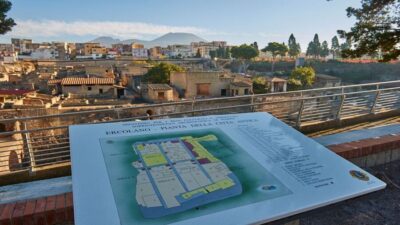
Pompeii, Herculaneum and Winery on Vesuvius with an Archaeologist
Read our review →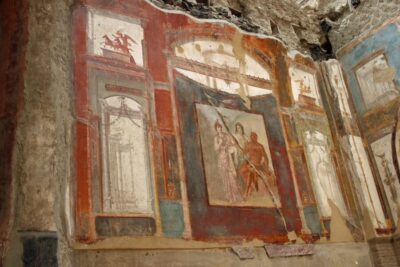
Pompeii & Herculaneum – Skip the line from Sorrento
Read our review →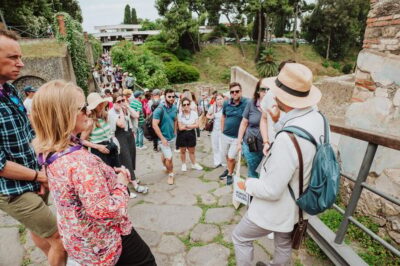
Pompeii and Herculaneum small group excursion from Sorrento
Read our review →
Private Pompeii and Herculaneum Day Tour with Pick Up
Read our review →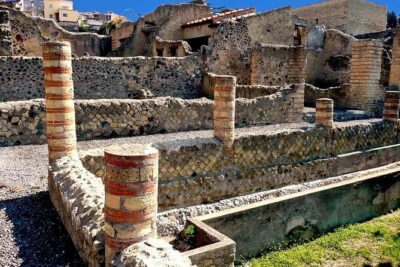
Browse the lists this tour appears in