
REVIEW · WALKING TOURS IN SORRENTO
Phlegraean Fields: Pozzuoli Guided Walking Tour
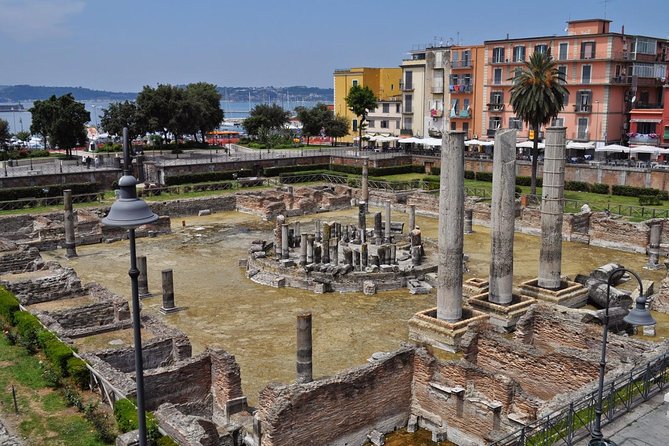
Pozzuoli gives you Roman history with a geological twist. On this private walk, you’ll see the Flavian Amphitheater, Italy’s third-largest Roman arena, then follow the streets toward the Macellum, better known as the Temple of Serapis. The ruins are not just old stones. They show how the ground itself has risen and fallen over time.
I like two things here. First, the private format lets your group set the pace and ask direct questions. Second, the walk joins major Roman remains to the working historic center and seafront, instead of treating Pozzuoli as a single isolated ruin. The main consideration is site access: the Temple of Serapis may be partly flooded or viewed from above, and the advertised timing is not fully consistent, with the tour described as about two hours in one place and three hours elsewhere.
Key points at a glance
- A huge Roman arena: The Flavian Amphitheater is smaller only than Rome’s Colosseum and the Capuan Amphitheater in Italy.
- A town shaped by moving ground: At the Temple of Serapis, you’ll learn how bradyseism altered the level of the land and brought seawater into parts of the site.
- Private attention: Only your group takes part, up to four people for the listed group price.
- A useful metro meeting point: You meet outside Pozzuoli metro station, near public transportation.
- Sea views at the finish: The route ends back at the meeting point after reaching Pozzuoli’s seafront.
- Tickets cost extra: Admission to the amphitheater and Temple of Serapis is not included.
Why Pozzuoli makes a strong alternative to Pompeii
Pompeii and Herculaneum are rightly famous, but Pozzuoli offers a different kind of Roman experience. Here, ancient remains sit inside a living town, close to streets, shops, public transport, and the water. You do not spend the entire visit walking through one sealed archaeological zone.
I like that contrast. The town was Roman Puteoli, an important port and public center, and the route helps connect its monuments to daily urban life. You get an arena built for spectacular public games, a market whose name became tied to an Egyptian god, and a seafront shaped by volcanic movement.
That said, you should not expect the same broad, preserved city view that you find at Pompeii. The route is shorter and more focused. Some parts of the Temple of Serapis may be inaccessible, and you may need to see important remains from the upper street rather than walk among them.
The experience is best for someone who wants a guide to explain how archaeology, Roman history, and local geology fit together. If your main goal is a large open-air city with houses, frescoes, and long streets, Pompeii or Herculaneum may offer more.
More Walking Tours in Sorrento
- Walking Food Tour in Sorrento w/ Limoncello Factory Lemon Grove
★ 4.5 · 821 reviews - Sorrento: Guided Walking Tour & Limoncello Tasting
★ 5.0 · 472 reviews - Sorrento: Night time Walking Tour & Limoncello Tasting
★ 5.0 · 155 reviews
Meeting outside Pozzuoli metro station at 10:00
The meeting point is in Pozzuoli, at the exit of the metro station, with a scheduled start at 10:00 a.m. This is practical if you are already in the Naples area and want to use public transportation rather than arrange a car. The activity information also places it near public transportation, which makes the starting point easy to identify in principle.
The supplied location is Pozzuoli, although the tour is marketed under Sorrento. Pay close attention to that distinction when planning your day. You should not assume that a Sorrento departure is included. The stated meeting point is the Pozzuoli metro exit, and the tour finishes back there.
Because this is a private activity, only your group participates. The listed price is $289.65 for up to four people, not per person. For four people, that works out to roughly $72.41 each before admission fees. For one person or a couple, the cost is much harder to justify unless you place a high value on private guiding.
The meeting area also suits an early start. The route has several stops, and the amphitheater and market require time if you want more than a quick photograph. Wear shoes suited to walking and be ready for the possibility that some viewing takes place along streets rather than on a fully open archaeological path.
Inside the Flavian Amphitheater
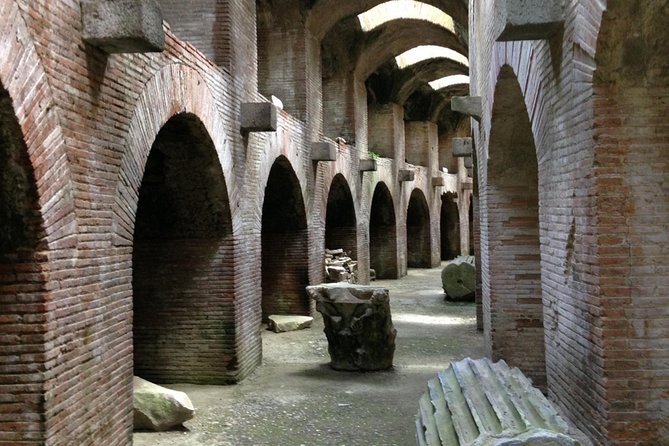
The first major stop is the Flavian Amphitheater, with about 30 minutes set aside for the visit. The arena is described as the third-largest in the Roman world and as smaller in Italy only than the Colosseum in Rome and the Capuan Amphitheater.
That size matters. A short visit can still give you a clear sense of the scale required for Roman public spectacles. The arena was built by Nero and hosted games held in honor of Tiridates, King of Armenia. Your guide can place that event within the political theater of the Roman world, where architecture and entertainment worked together to display power.
The best part of a guided stop here is not simply seeing the seating or arena shape. It is understanding why construction took so long and why a building of this scale required such a large public investment. The description specifically points to the long construction process, so this is a place where your guide’s explanation adds real value.
Thirty minutes is enough for an introduction, but it is not a leisurely archaeological study. Admission is not included, so add the ticket cost to your budget. The available information does not state the exact admission price or the precise ticket arrangements, so check those details when booking.
The arena is also the most secure part of the visit for someone who wants a major, recognizable Roman monument. If the Temple of Serapis is partly flooded or viewed from the road, the amphitheater gives the tour a substantial first stop.
The Temple of Serapis and the evidence of bradyseism
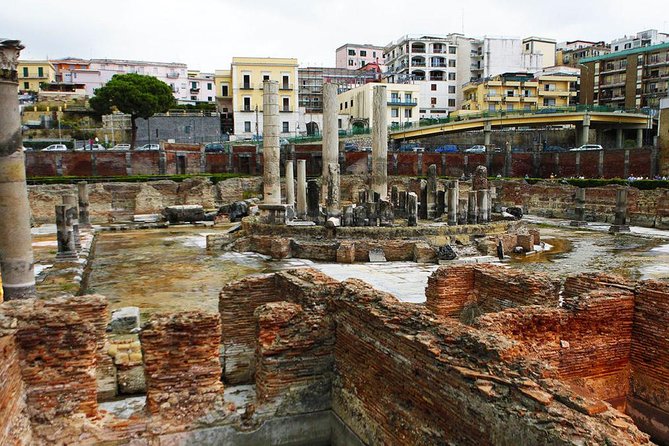
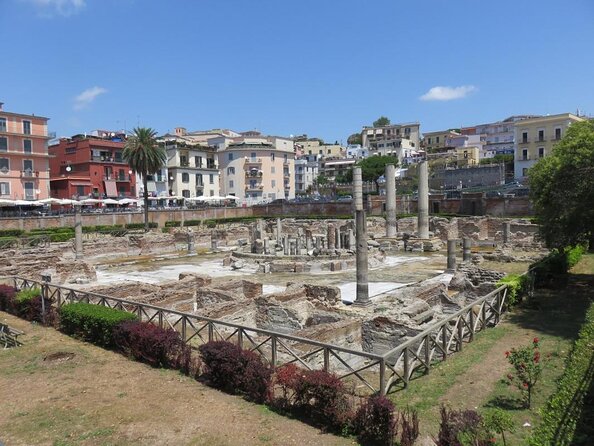
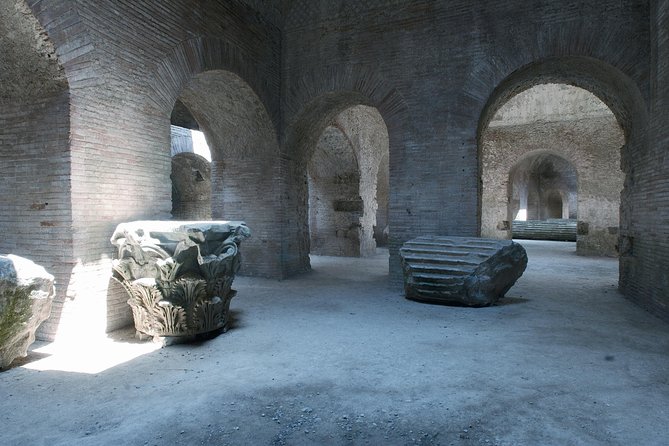
The second main stop is the Macellum of Pozzuoli, a Roman public market. It is often called the Temple of Serapis because a statue of the Egyptian god was found there in 1750. The name can mislead you, and that is part of the fun. You are not simply looking at a temple. You are learning how later discoveries shaped the way people understood the site.
A macellum was a market, so ask your guide to explain who used it and what was sold there. The tour is designed to answer who frequented the market and how it functioned in Roman Puteoli. This makes the stop more useful than a quick look at a few columns.
The most unusual subject here is bradyseism, the slow rising and sinking of the ground. Pozzuoli lies in the Phlegraean Fields, an area known for volcanic activity. At the market, the condition is visible in the relationship between the ruins and the sea.
The site may be partly flooded. In some conditions, you may look down at the remains from the upper part of the street instead of entering every section. That is an important limitation, especially if you expect a conventional ruin visit with a clear route through the monument.
Still, the restricted view can sharpen the lesson. The water is not merely an inconvenience. It helps you see that the ground has shifted over time. The Temple of Serapis is valuable because the site links a Roman market to a living geological process.
You should also keep your expectations measured. The access problem can reduce the amount of detail you see at ground level. If you have already visited Pompeii and Herculaneum, this stop may feel less visually rich. Its appeal lies in the combination of Roman remains and changing earth, not in the number of intact buildings.
Same coastline, a very different day:
- Sorrento: Exclusive Capri Boat Tour and Optional Blue Grotto
★ 4.8 · 3,170 reviews - Sorrento Farm and Food Experience including Olive Oil, Limoncello, Wine tasting
★ 5.0 · 2,524 reviews - Capri Blue Grotto Small-Group Boat Day Tour From Sorrento
★ 4.5 · 2,511 reviews - From Sorrento/Nerano: Amalfi and Positano Boat Tour
★ 4.6 · 2,440 reviews
Walking through Pozzuoli’s historic center
After the amphitheater and market, the route continues through Pozzuoli’s historic center for about an hour. This is where the tour moves beyond two monuments and gives you a feel for the town itself.
I like this part because it gives context to the ruins. The ancient city was not separated from ordinary life. Roman Puteoli served as a public and commercial center, and the historic streets help you picture how the monuments related to one another.
The guide’s role matters most here. The route promises the oldest secrets of Pozzuoli, but the supplied details do not list every street, church, building, or viewpoint included. Think of this hour as a guided orientation through the center rather than a fixed checklist of named attractions.
The walk also gives you time to ask questions about bradyseism. At Pozzuoli, geology is not an abstract topic. It affects the appearance and accessibility of the archaeological remains. A good explanation can help you understand why part of the ancient market is close to seawater and why the town’s elevation has changed.
Since this is a walking tour, the private format is useful. You can ask the guide to slow down, explain a Roman term, or spend more time on a subject that interests your group. A family with children, for example, may get more from the story of a moving town than from a long list of dates.
The route is also fairly compact. The amphitheater, historic center, market, and seafront are treated as parts of one town rather than separate day trips. That makes the experience a good fit if you want a concentrated introduction to the Phlegraean Fields.
Finishing beside the Pozzuoli seafront
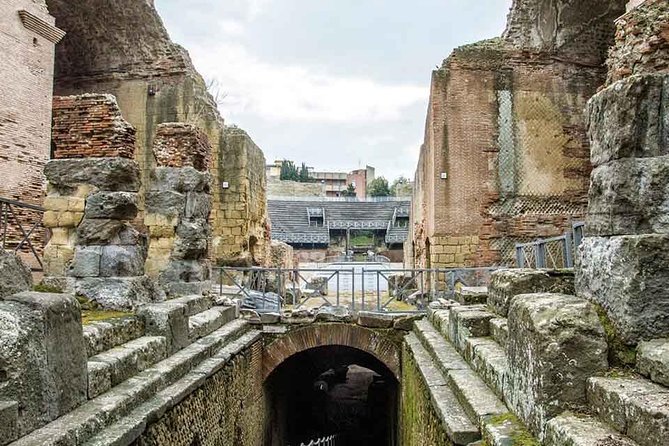
The walk ends with the seafront and its broad view of the water, then returns to the meeting point. This closing view gives the tour a welcome change of pace after the ruins and city streets.
The seafront also brings the main subject into focus. Pozzuoli’s relationship with the sea is part of its history, not just a pleasant final stop. Looking across the water after seeing the Temple of Serapis helps connect the ancient port, the market, and the area’s volcanic movement.
The available description says the experience lasts about two hours, while another part describes three hours of discovery. Plan for the longer figure so you are not rushed afterward. The listed itinerary alone includes 30 minutes at the amphitheater, 30 minutes at the market, and one hour in Pozzuoli, already totaling two hours before transitions.
That timing matters if you are arranging a train, a meal, or another booked activity. Ask the operator to confirm the expected end time before you reserve anything immediately afterward.
What the $289.65 group price really means
The cost is $289.65 per group of up to four, with a professional guide included. For a full group, the per-person price is reasonable for a private experience, particularly if you want personal explanations rather than a large scheduled group.
For two people, the price becomes a more serious decision. For one person, it is expensive for a short walking tour, especially because entrance tickets are extra. The value improves if you can share the cost with friends or family.
You are paying for the guide’s time, privacy, and a route that joins three different subjects: Roman entertainment, Roman commerce, and bradyseism. You are not paying for an all-inclusive archaeological pass. Admission tickets where required are excluded, and the exact ticket prices are not provided.
Whispers are included for groups of six or more. Since this activity is limited to four people, that equipment does not appear relevant to the advertised private format. The important inclusion for your group is the professional guide.
Free cancellation is available if you cancel at least 24 hours before the start time. Changes or cancellations inside that window are not refunded, and the activity requires a minimum number of participants. If the operator cancels because that minimum is not met, you are offered another date or activity, or a full refund.
Who should book this Pozzuoli walk
I would choose this tour if you want a focused introduction to Pozzuoli and prefer a private guide. It suits couples, families, and small groups who want to ask questions and move at their own pace.
It is also a good choice for repeat visitors to the Naples area. If you have already seen Pompeii, Pozzuoli gives you a different Roman setting, with an arena, a market, a seafront, and visible evidence of ground movement.
You may want to skip it if your priority is unrestricted access to every ruin. The Temple of Serapis can be partly flooded, and some of the site may be viewed from above. You should also reconsider if you want a long, full-day archaeological visit. This is a compact walk, not a replacement for Pompeii or Herculaneum.
The tour is suitable for most people, and service animals are allowed. Still, you should be comfortable walking through an urban area for up to three hours and handling some uneven or changing conditions around archaeological sites.
Should you book it?
Book this experience if you want Roman history tied to real geology, a private guide, and a short route that ends by the sea. The Flavian Amphitheater is the strongest monument, while the Temple of Serapis offers the most unusual story.
I would book it for a group of three or four, confirm the true duration, and ask about current access to the market before paying. If the Temple of Serapis is your main reason for going, its possible flooding is the key question.
If you want grand ruins that you can explore for hours, choose Pompeii or Herculaneum instead. If you want to understand why Pozzuoli feels different from those sites, this private walk makes a sensible and interesting choice.
FAQ
Where does the tour begin?
The tour begins at the exit of the Pozzuoli metro station in Pozzuoli, Italy.
What time does the tour start?
The scheduled start time is 10:00 a.m.
Where does the tour end?
The activity ends back at the meeting point after the walk and the seafront visit.
How long does the tour last?
The tour is listed as approximately two hours, although the description also refers to three hours of discovery. Confirm the expected end time with the provider.
What sites are included in the route?
The route includes the Flavian Amphitheater, the Macellum of Pozzuoli, also called the Temple of Serapis, Pozzuoli’s historic center, and the seafront.
Are admission tickets included?
No. Admission tickets where required are not included in the price.
Is this a private tour?
Yes. Only your group participates, and the listed group size is up to four people.
What is the cancellation policy?
You can cancel for a full refund up to 24 hours before the experience start time. Cancellations or changes made less than 24 hours before the start are not refunded.
New on the Sorrento list
- Vico Equense: Authentic Cooking Class at a Local’s Home★ 5.0 · 4 reviews
- Vico Equense: Dining Experience at a Local’s Home★ 5.0 · 4 reviews
- Vico Equense: Tour in the dairy “Mozzarella Experience”★ 5.0 · 19 reviews
- Private tour of Amalfi Coast★ 5.0 · 71 reviews
- Private Virtual Cooking Class from Sorrento★ 5.0 · 25 reviews
- Sorrentomaxiboat tours to Capri★ 5.0 · 63 reviews
- Private transfer from Salerno to the Amalfi Coast, or vice versa★ 5.0 · 30 reviews
- Yoga Experience – Sorrento★ 5.0 · 29 reviews
Walking Tours in Sorrento, compared.

Walking Food Tour in Sorrento w/ Limoncello Factory Lemon Grove
Read our review →

Sorrento Private Walking Tour with Guide and Limoncello Tasting
Read our review →

Browse the lists this tour appears in