
REVIEW · SORRENTO LIMONCELLO TASTINGS
Sorrento Walking Tour & Limoncello Tasting
Sorrento’s most useful introduction may be its geography lesson. This two-hour walk links the deep Vallone dei Mulini, the old town, cliff-top views, churches, craft traditions, and the local lemon trade. Guide Mario brings a strong sense of place, explaining not just what you see, but why Sorrento was built the way it was.
I like the way the tour combines orientation and local flavor. You learn how the valleys, volcanic ground, roads, and Gulf of Naples shape the town, then finish with limoncello, lemon cream, chocolates, pistachio cream, and other samples. The main drawback is that it is a walking overview, not a deep visit inside major monuments, and a strict 10-minute late-arrival rule leaves little room for delays.
Key points to know before booking

- See the Vallone dei Mulini first: This striking old valley gives you a quick lesson in Sorrento’s unusual terrain.
- Learn the town’s layout on foot: Piazza Tasso, the historic center, Villa Comunale, and San Francesco are tied together in a compact route.
- Go beyond postcard history: The tour covers lemons, limoncello, wood inlay, churches, volcanic ground, and local geography.
- Finish at Campaniadamare: Taste locally made limoncello, creams, chocolates, flavored olive oils, and other specialties.
- Plan for uneven streets: Wear shoes with good grip, especially if rain is possible.
- Best early in your stay: The route helps you get your bearings before exploring Sorrento on your own.
Why this Sorrento walk is useful
Many visitors first meet Sorrento through a hotel balcony, a busy shopping street, or a quick stop between Naples and the Amalfi Coast. That gives you the postcard, but not always the explanation. This tour supplies the missing pieces in a compact two-hour walk.
I like that the experience begins with the town’s physical setting rather than rushing straight to souvenir shops. Sorrento is shaped by valleys, slopes, cliffs, old roads, and views across the Gulf of Naples. Once you understand that basic framework, the streets make more sense.
The second strength is its local focus. You hear about Sorrento’s lemons and limoncello, but also about wood inlay, old churches, local artists, and the town’s Greek and Roman influences. The tour is not only a parade of pretty buildings. It gives you useful context for what you will see later.
The walk costs $30.17 per person and lasts about two hours. For that price, you receive a guide, the walking route, alcoholic drinks, and snacks. There is no private vehicle, so you are paying for interpretation and tasting rather than transport or admission to a major paid attraction.
The group can reach 20 people, though some departures may be smaller. One account describes a group of no more than 10, which is a comfortable size for a town walk. Still, group size can vary, so do not book this expecting a private tour.
More Food and Drink Tours in Sorrento
- Sorrento Farm and Food Experience including Olive Oil, Limoncello, Wine tasting
★ 5.0 · 2,524 reviews - Sorrento: Coast and Capri Boat Trip with Limoncello Tasting
★ 4.4 · 2,037 reviews - Pizza School with Wine and Limoncello Tasting in a Local Farm
★ 5.0 · 845 reviews
Starting at the Vallone dei Mulini
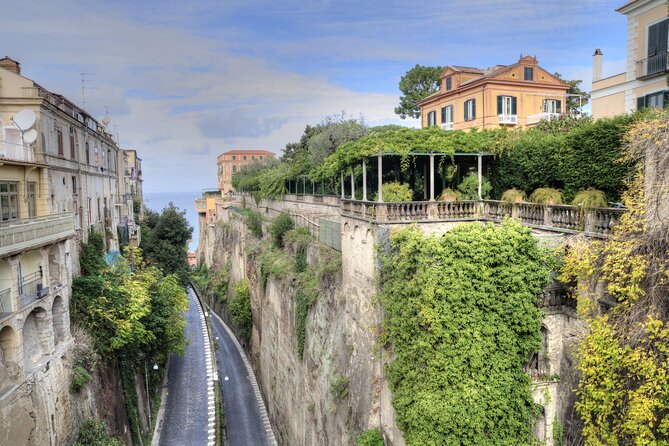
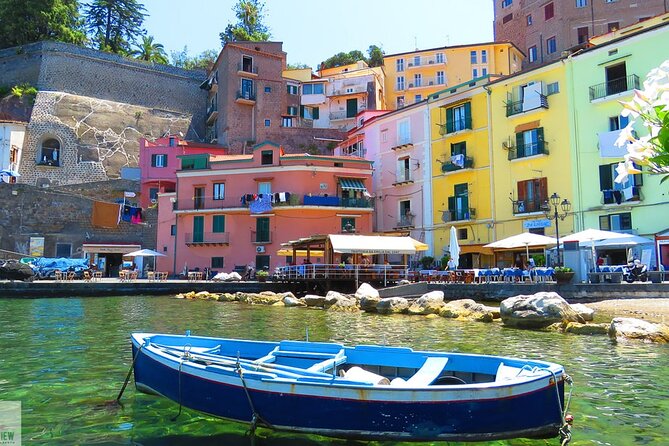
Meet at Piccadilly Pub on Via Fuorimura 1. The first stop is Il Vallone dei Mulini, one of Sorrento’s most photographed views and one of the best places to understand the town’s unusual form.
The valley is a deep cut in the ground, covered with thick plant growth and containing the remains of an old mill. Ancient bridges once connected the valleys around Sorrento. From here, your guide explains how the town’s natural shape affected settlement, roads, and movement.
This opening works well because it gives you more than a pretty photograph. You begin to see Sorrento as a place shaped by erosion, volcanic material, and steep changes in level. The stop lasts about 15 minutes and costs nothing to enter.
The main limitation is that the valley is viewed rather than explored at length. You should expect an outlook and an explanation, not a long descent or a walk through the vegetation. Even so, it is a smart first stop. It sets up the rest of the tour.
Piazza Tasso and Sorrento’s changing center
From the valley, the route moves to Piazza Tasso, Sorrento’s main square. It is named for Torquato Tasso, one of Italy’s major poets, and the guide explains how this central space was once a natural valley.
That detail helps you read the square differently. A busy urban center can hide the old shape of a town. Here, the story of the valley beneath the square connects the modern city to the terrain you saw at the first stop.
The visit lasts about 10 minutes. Do not expect a long stop for sitting, shopping, or people-watching. The value is in the quick explanation and in seeing how Sorrento’s central public space fits into its older geography.
This is also a useful point for orientation. After the tour, Piazza Tasso can serve as your mental reference point when you return to the old lanes, restaurants, churches, or the route toward the seafront.
Walking the old lanes and learning about lemons
The historic center receives the longest stop, about 30 minutes. This is where the walk becomes less about individual monuments and more about everyday Sorrento.
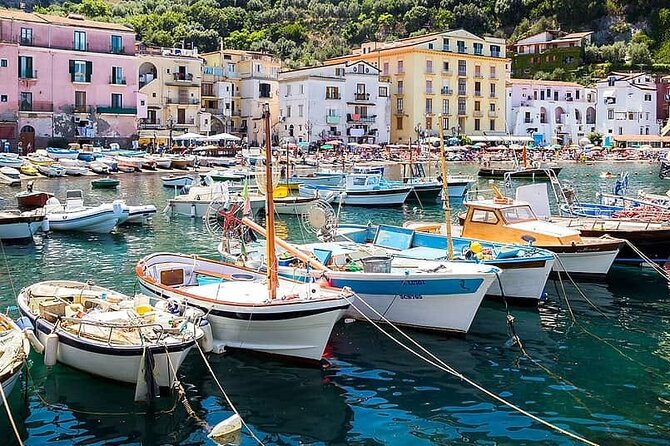
You move through narrow lanes, uneven paving, old buildings, hanging laundry, craft shops, and grander residences. The route includes the Villa Comunale, where you can look toward the Sorrento coast and the Gulf of Naples. The views help connect the town center with the larger setting around it.
I especially like the attention to local crafts. The tour introduces Sorrento’s wood inlay tradition, an art that is becoming less common. This gives you something to watch for in workshops and displays later. If you are tired of tours that point only to churches and statues, the craft element adds a welcome human touch.
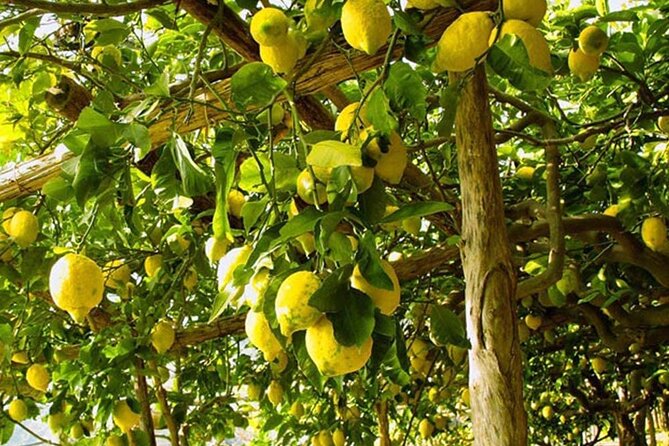
The lemon discussion is another major part of this section. You learn about the famous Sorrento lemon, how it relates to the area, and how limoncello is produced. The guide also explains differences between lemons, a small detail that can make the tasting at the end more interesting.
The route is not only historical. It includes geography, food production, art, religion, and local life. That matters because one visitor found the tour too focused on history and wanted more general advice about Sorrento. The experience does include non-historical material, but you should still book it for cultural orientation rather than a full itinerary-planning session.
If you want restaurant recommendations, transport instructions, or a detailed list of day trips, ask your questions during the walk. Some practical suggestions may come at the end, but the central purpose is to explain Sorrento itself.
More Walking Tours in Sorrento
- Walking Food Tour in Sorrento w/ Limoncello Factory Lemon Grove
★ 4.5 · 821 reviews - Sorrento: Guided Walking Tour & Limoncello Tasting
★ 5.0 · 472 reviews - Sorrento: Night time Walking Tour & Limoncello Tasting
★ 5.0 · 155 reviews - Sorrento: Guided Walking Tour & Street Food Experience
★ 4.6 · 152 reviews
A quiet pause at San Francesco
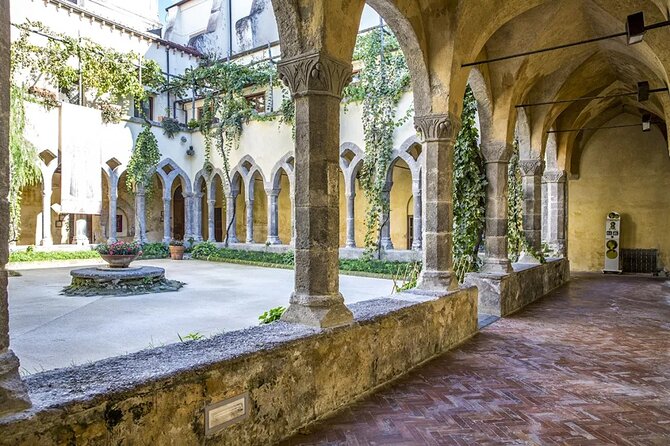
The Chiostro di San Francesco is a fourteenth-century cloister associated with the Franciscan friars. The stop lasts about 10 minutes and introduces one of Sorrento’s oldest and most recognizable settings.
A cloister offers a change of pace from the open square and narrow commercial lanes. Its enclosed form, arches, and religious setting give you a quieter look at the town. The guide places the site within Sorrento’s religious and architectural story.
The tour does not list a separate admission charge, and the stop is brief. You should not expect an extended guided visit through every part of the complex. Think of it as a focused introduction and a chance to appreciate one of the city’s defining places.
This is also a good reminder that Sorrento is not just lemon products and sea views. Churches, cloisters, local artists, and older buildings all form part of the town’s identity.
The tasting at Campaniadamare

The final stop is Campaniadamare on Via San Francesco 17A. This is a shop selling local products, and the tasting is included in the tour price.
You can sample limoncello first, along with other liqueurs and sweet products. The shop also offers limoncello cream, pistachio cream, chocolate, and flavored olive oils. One especially unusual sample mentioned by the guide is buffalo cream, which adds a different texture and flavor to the familiar lemon-based finish.
The tasting is more generous than a single token sip. The stated format offers a range of free samples so you can compare the products and consider their texture, aroma, and sweetness. That makes the earlier explanation of lemons and production feel connected to the final stop.
You can purchase products if you wish, but buying is optional. This is important for anyone wary of tours that turn into long sales visits. The route is presented as a cultural walk, and the shop functions as the final tasting stop rather than the main purpose of the morning.
I would save room for this part. The tasting includes alcoholic drinks and snacks, so it is not ideal if you are looking for a completely dry or strictly sightseeing-focused experience. It can also be a convenient place to buy gifts, especially if you want lemon products that are easier to carry home than fresh produce.
What guide Mario adds
Mario is the guide most closely associated with this experience. He is described as a local with a strong interest in Sorrento’s history, geography, churches, artists, lemons, and crafts.
His approach appears to be explanatory rather than theatrical. The strongest part of the tour is the amount of context he brings to ordinary sights: lava roads, the town’s valleys, the difference between local lemons, Greek and Roman influences, and the changing role of wood inlay.
I like that the guide introduces local artisans and points out details you could easily miss alone. A walking tour is most valuable when it changes the way you look at a street after the guide has gone. Here, the old paving, the shops, the churches, and the valley all gain a little more meaning.
The experience is offered in English. Since the maximum group size is 20, ask questions when you can and stay near the guide in busy sections. The guide will move on if someone is more than 10 minutes late, so punctuality is not a minor detail.
How hard is the walk?

Most people can take part, but this is still a town walk with slopes and uneven surfaces. Sorrento has bumpy streets, changes in level, and sections that can become slippery in wet weather.
Wear comfortable shoes with non-slip soles. Sandals with a smooth bottom are a poor choice if rain is expected. Bring an umbrella or raincoat when the forecast is uncertain.
The tour requires good weather. If conditions make the walk impossible, you will be offered another date or a full refund. It can also be canceled if the minimum number of participants is not reached, with the same basic choice of another option or a refund.
Start at the meeting point on time. The guide is scheduled to arrive at the stated start time, not earlier, so do not expect someone to be waiting long before the official beginning. If you have trouble finding the location, use the Viator messaging service rather than relying on an international phone call.
Is $30.17 a fair price?
I consider $30.17 a fair price if you want a guided introduction to Sorrento and enjoy tasting local products. You are getting about two hours of live explanation, a route through several central areas, and included samples at the end.
The value is strongest when you take the tour early in your stay. It can help you understand the town’s layout, spot the old lanes, recognize wood inlay, and decide which areas deserve a second visit. You also avoid spending your first day wandering without context.
The price is less attractive if you want paid monument entries, transportation, or a private guide. None of those are included. You are buying a shared walking experience, not a vehicle tour or an in-depth archaeological visit.
Free cancellation is available until 24 hours before the scheduled start. Changes or cancellations inside that window are not refunded, except when the operator cancels because of weather or insufficient participation.
Who should book this Sorrento tour?
I would choose this walk if you are visiting Sorrento for the first time and want a quick sense of the town before exploring alone. It is also a good fit for anyone who likes local food, geography, church architecture, small craft traditions, and short historical explanations.
Families and mixed-age groups may appreciate the manageable two-hour length. Most people can participate, but anyone with difficulty on slopes or slippery paving should think carefully about footwear and comfort.
This is not the right pick if you want a museum-heavy tour, long interior visits, a private experience, or a detailed day-planning consultation. It is also not ideal for anyone who dislikes alcohol tastings or shops, even though purchases are optional.
Should you book it?
Book it if you want a strong first look at Sorrento, especially early in your stay. The combination of the Vallone dei Mulini, Piazza Tasso, old lanes, Villa Comunale, San Francesco, local crafts, lemon lore, and limoncello gives you a useful framework for the rest of your visit.
Skip it if you prefer to explore without a guide or want major attractions visited in depth. For most first-time visitors, though, the price is reasonable, the route is manageable, and the tasting adds a pleasant local finish. Arrive early, wear shoes with grip, and treat the walk as an orientation to Sorrento rather than a complete tour of everything the city offers.
FAQ
How long does the Sorrento walking tour last?
The tour lasts approximately two hours.
What language is the tour offered in?
The tour is offered in English.
Where does the tour begin and end?
It begins at Piccadilly Pub, Via Fuorimura 1, in Sorrento. It ends at Campaniadamare, Via San Francesco 17A.
Is limoncello tasting included?
Yes. Alcoholic beverages and snacks are included, with the final tasting taking place at Campaniadamare.
What products can I taste at the final stop?
Samples may include limoncello, limoncello cream, pistachio cream, chocolate, flavored olive oils, and other local liqueurs and products.
What happens if it rains?
The experience requires good weather. If poor weather prevents the tour from operating, you will be offered a different date or a full refund. Bring an umbrella or raincoat if the forecast is uncertain.
More limoncello tastings around Sorrento
- Sorrento: Pizza Lesson, Wine, and Limoncello at a Local Farm
★ 5.0 · 1,513 reviews - Authentic Farm Tour with Pizza, Cheese, Wine & Limoncello Tasting
★ 5.0 · 698 reviews - Sorrento Farm by Tuk Tuk: Cheese, Limoncello & Hands-On Pizza
★ 5.0 · 628 reviews - Capri Boat & Land Tour from Sorrento with Limoncello Tasting
★ 4.5 · 250 reviews
New on the Sorrento list
- Vico Equense: Authentic Cooking Class at a Local’s Home★ 5.0 · 4 reviews
- Vico Equense: Dining Experience at a Local’s Home★ 5.0 · 4 reviews
- Vico Equense: Tour in the dairy “Mozzarella Experience”★ 5.0 · 19 reviews
- Private tour of Amalfi Coast★ 5.0 · 71 reviews
- Private Virtual Cooking Class from Sorrento★ 5.0 · 25 reviews
- Sorrentomaxiboat tours to Capri★ 5.0 · 63 reviews
- Private transfer from Salerno to the Amalfi Coast, or vice versa★ 5.0 · 30 reviews
- Yoga Experience – Sorrento★ 5.0 · 29 reviews
Sorrento Limoncello Tastings, compared.

Sorrento Farm and Food Experience including Olive Oil, Limoncello, Wine tasting
Read our review →
Coast and Capri Boat Trip with Limoncello Tasting
Read our review →
Pizza Lesson, Wine, and Limoncello at a Local Farm
Read our review →
Small Group Capri Island Boat Ride with Swimming and Limoncello
Read our review →
Pizza School with Wine and Limoncello Tasting in a Local Farm
Read our review →
Walking Food Tour in Sorrento w/ Limoncello Factory Lemon Grove
Read our review →
Authentic Farm Tour with Pizza, Cheese, Wine & Limoncello Tasting
Read our review →
Sorrento Farm by Tuk Tuk: Cheese, Limoncello & Hands-On Pizza
Read our review →Browse the lists this tour appears in