
REVIEW · POMPEII TOURS
Private Pompeii & Herculaneum Tour from Sorrento
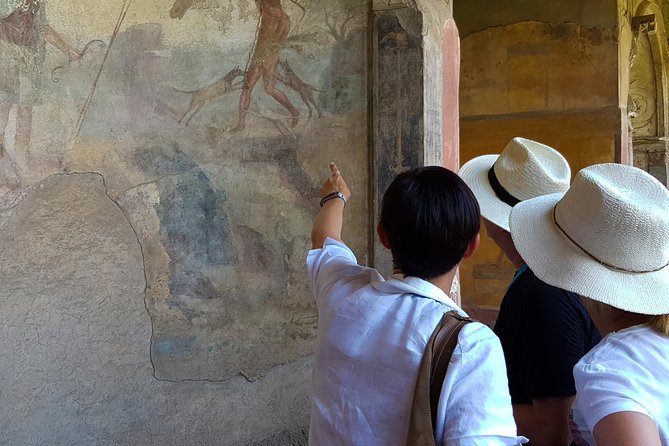
Pompeii and Herculaneum tell two different stories of the same catastrophe. Pompeii gives you a large Roman city with forums, shops, baths, theaters, and election graffiti. Herculaneum is smaller but preserves more delicate details, including wooden doors, painted rooms, and a boat recovered from the ancient beach. A private guide helps you make sense of both without wasting time finding the right entrance or route.
I like the private vehicle from Sorrento, since the trip inland is much easier than arranging separate trains, taxis, and site tickets. I also like the two-hour guided visit at each ruin, long enough to see the main sights without attempting every street in Pompeii. The main drawback is the price: at $769.43 per person, this is a costly day unless your group values private transport, advance entry, and a guide who can keep the history moving.
Key points to know before booking
- Two major Roman sites in one day: Pompeii and Herculaneum are covered on the same eight-hour outing.
- Private transport from Sorrento: Pickup and return are provided by air-conditioned vehicle from a central Sorrento hotel or agreed meeting point.
- Pre-booked admission: Skip-the-line entrance tickets are included for both archaeological parks.
- Pompeii gets the longer visit: The guided portion covers the forum, Temple of Jupiter, Macellum, Via dell’Abbondanza, baths, brothel, houses, theater, and basilica.
- Herculaneum rewards close looking: Expect mosaics, painted rooms, baths, a wooden door, and the famous boat from the old beach.
- Plan for heat and hard walking: Sunscreen, water, and comfortable shoes matter, especially in summer.
Why seeing Pompeii and Herculaneum together works
If you visit only Pompeii, you see the larger city and its public life. If you visit only Herculaneum, you get a closer look at Roman homes and preserved household details. Seeing both lets you compare them instead of treating the eruption as a single, simple story.
The tour begins with pickup at your hotel in central Sorrento, or at the agreed meeting point at Piazza Torquato Tasso. From there, a private air-conditioned vehicle takes you inland. This saves more time than it may sound like on paper. You do not need to work out connections, buy separate tickets, or arrive at an unfamiliar entrance without knowing where your guide will be waiting.
The day lasts about eight hours, with a return to Sorrento around 4pm to 5pm. That timing leaves room for lunch between the two sites, though food and drinks are not included. A past version of this outing was described as a group of about 20, while the current arrangement is presented as private, with only your group participating. I would confirm the exact vehicle and group setup when booking, especially if privacy is the reason you are paying the premium.
More Herculaneum tours from Sorrento:
- Guided Day Tour of Pompeii and Herculaneum with Light Lunch
★ 4.5 · 311 reviews - Sorrento: Pompeii & Herculaneum Tour with Skip-the-Line
★ 4.6 · 125 reviews - Pompeii, Herculaneum and Winery on Vesuvius with an Archaeologist
★ 5.0 · 89 reviews
Pompeii begins with a city, not just a disaster
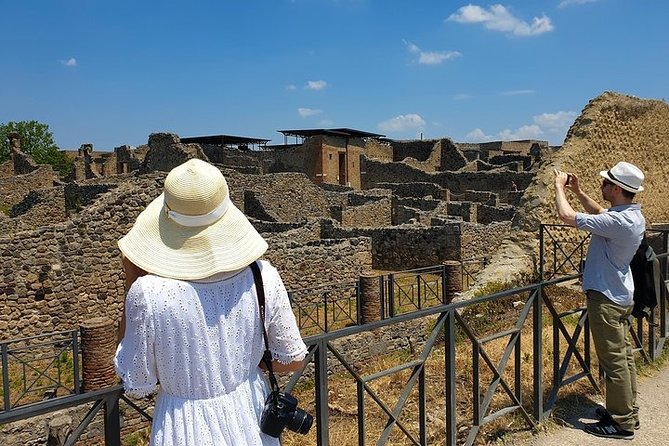
Pompeii is vast. That is its great strength and its main challenge. Without a plan, you can spend hours walking on ancient stone streets and still miss the places that best explain Roman public life.
Your guide meets you near the entrance to the archaeological park. The main guided visit lasts two hours, and the route focuses on the central sights rather than trying to cover the entire site. That is a sensible choice. Pompeii is too large for a complete visit in a short afternoon, and a focused route keeps the day manageable.
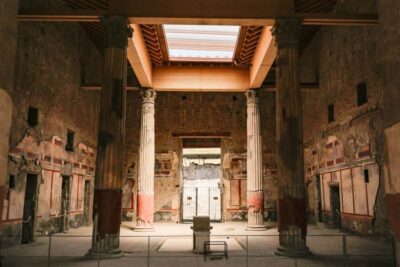
The eruption of Mount Vesuvius in AD 79 is part of the story, but it should not swallow the story. Before the ash and pumice, Pompeii was a working city with markets, courts, temples, bathhouses, entertainment, private homes, and busy commercial streets. A good guide turns broken walls into clues about how people used the city.
The Forum, Temple of Jupiter, and the city’s public heart
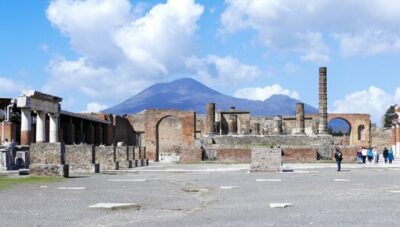
The Civil Forum is the natural starting point for understanding Pompeii. This open public square was the center of administration, law, trade, and worship. From here, you can see why the city was not simply a collection of houses. It had a clear civic structure, with major buildings arranged around a shared public space.
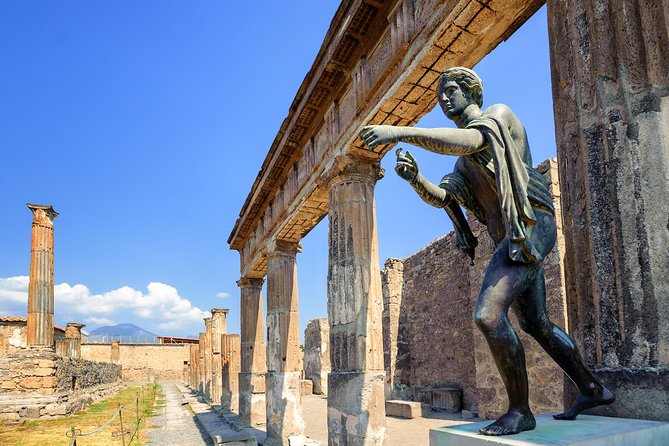
The Temple of Jupiter dominates the north side of the Forum. Its position also gives you one of the classic Pompeii views, with Mount Vesuvius rising behind it. The temple was reshaped after Pompeii became a Roman colony in 80 BC, and its design reflected the Capitolium in Rome, with Jupiter, Juno, and Minerva honored together.
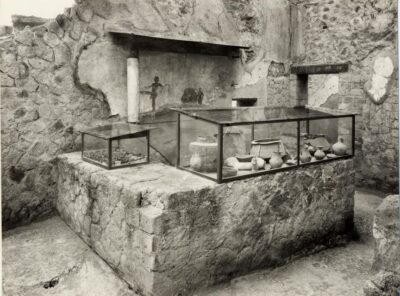
The Macellum, or market, adds a more everyday note. Its layout included a covered portico, rooms connected with religious activity, and a large room with a masonry counter that may have been used for selling fish. The details are tentative, but that uncertainty is useful. Archaeology often works through evidence and interpretation rather than neat answers.
Via dell’Abbondanza and the daily rhythm of Pompeii
Via dell’Abbondanza was Pompeii’s main commercial artery, running from the Forum toward the Sarno Gate. Walking along its basalt paving stones gives you a better feel for ordinary movement through the city than any single monument can.
Look for shops, workshops, raised stepping stones, and graffiti connected with local elections. These marks help bring the street down to human scale. You can picture people crossing the road, stopping at businesses, and posting political messages on walls. The route is not just about grand temples. It shows a city where politics, trade, errands, and social life all shared the same streets.
The Stabian Baths are another strong stop. They were Pompeii’s oldest and largest public bathing complex, with separate areas for men and women, a palaestra for exercise, and a heating system beneath the floors. The sequence of changing rooms, cold rooms, warm rooms, and hot rooms shows how much engineering and social planning went into a Roman bath visit.
More Pompeii tours from Sorrento:
- Sorrento: Skip-the-Line Pompeii Express Tour by Train
★ 4.8 · 2,038 reviews - Priority Access Pompeii & Mt. Vesuvius Full day from Sorrento
★ 4.5 · 1,376 reviews - Pompeii Express Guided Tour by Train from Sorrento
★ 4.5 · 770 reviews - Skip-the-Line Pompeii Guided Tour from Sorrento
★ 4.5 · 722 reviews
Brothels, aristocratic homes, theaters, and law courts
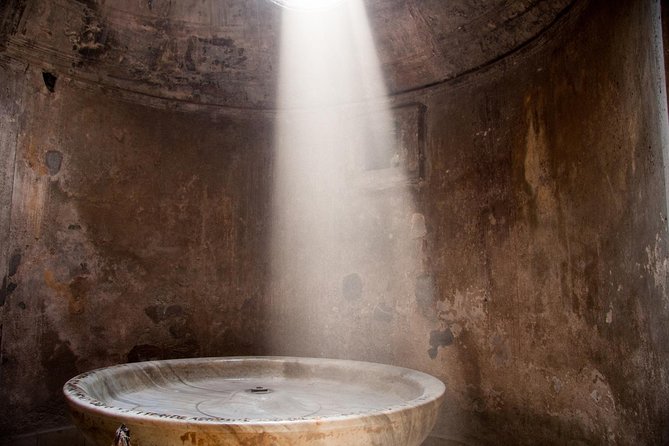
The Lupanar is a brief stop, usually about five minutes, but it is one of Pompeii’s most recognizable buildings. Erotic paintings remain on the walls, and the small rooms offer a blunt reminder that prostitution was part of the city’s commercial life. The guide can provide context that keeps the stop from becoming a cheap curiosity.
The House of the Faun gives you the other end of the social scale. Built in the second century BC, it was one of Pompeii’s largest private residences and a powerful example of aristocratic Roman living. Its association with major works of art and its size help explain how much wealth some families controlled.
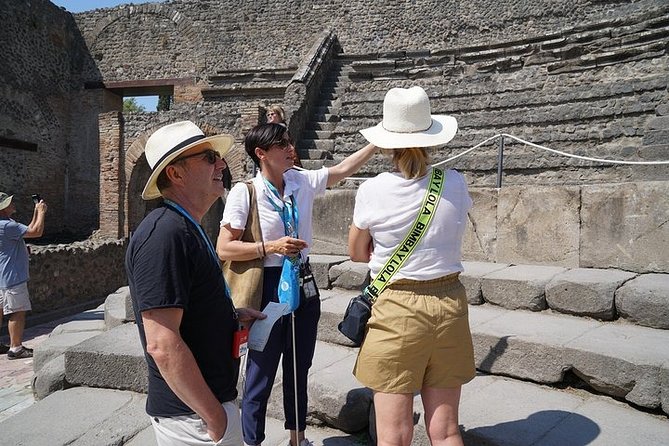
At the Teatro Grande, you see how the city entertained thousands. The horseshoe-shaped theater was built into a natural hillside and could hold about 5,000 people. It hosted comedies, tragedies, and pantomimes. The seating and stage arrangement make it easier to imagine Pompeii as a lively civic center rather than a silent ruin.
The Basilica completes the public side of the route. Covering about 1,500 square meters, it was used for business and the administration of justice. It was the Forum’s most sumptuous building, and its remains show how closely commerce and law were tied together in Roman civic life.
A free lunch break separates the two sites
After Pompeii, you have free time for lunch at your own expense. This is a welcome pause because the first site involves steady walking, uneven surfaces, and exposure to the sun. One account of the day describes a convenient restaurant stop, but the supplied details do not promise a specific restaurant, menu, or meal.
Bring or buy water rather than assuming it will be provided. One guest specifically wished water had been included, and food and drinks are listed as extras. Comfortable shoes are essential, while sunscreen and a hat are sensible in hot weather.
The lunch break also gives you time to reset before Herculaneum. Trying to rush from one archaeological park to the next without a pause would make an already full day feel much longer.
Herculaneum preserves the details Pompeii loses

Herculaneum was also destroyed in AD 79, but the town was covered by mud and volcanic material rather than the lighter ash and pumice that buried much of Pompeii. The result is a smaller site with unusually well-preserved houses, decoration, and wooden elements.
The guided visit here lasts two hours, followed by free time to explore. That arrangement is helpful because Herculaneum rewards a slower look. Its streets and buildings are more compact, so you can spend time noticing wall paintings, mosaics, thresholds, and household layouts instead of simply trying to reach the next major monument.
The Casa dei Cervi is one of the most appealing residential stops. This large villa once had a seafront position and was arranged around a central courtyard. Murals and still-life paintings survive, giving you a closer look at the private side of Roman life.
The College of the Augustales was linked to the worship of Emperor Augustus and may also have served as a local administrative center. It helps show how imperial loyalty and civic organization worked together in Roman towns.
Wooden doors, public baths, and the House of the Skeleton
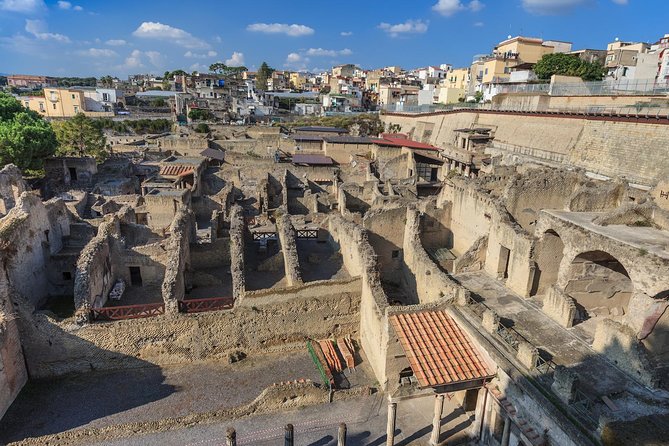
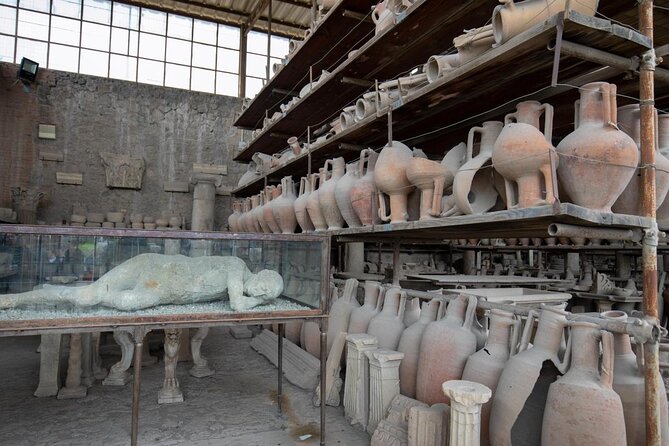
The House of the Skeleton probably formed from three smaller buildings. Its name comes from human remains found in an upstairs room in 1831. The stop is a sober reminder that the eruption was not an abstract historical event. People tried to shelter in their homes, but suffocating gases and extreme heat overwhelmed them.
The Central Thermae, or public baths, are particularly useful for comparison with Pompeii. You can follow the familiar Roman bathing sequence through changing areas, cold baths, warm rooms, and hot rooms. The surviving arrangement shows that bathing was both a practical routine and an important part of public life.
At the House of the Wooden Partition, a folding wooden door once separated the atrium from the owner’s study. Benches outside the facade may have been used by clients waiting to see the head of the household. That small feature tells you a great deal about status, patronage, and the formal nature of Roman social relationships.
The boat and the final view toward the ancient shore
The Hall of the Boat of Herculaneum contains a wooden vessel recovered from the ancient beach. After the eruption, people fled toward the shore, but the sea, sand, lava, and volcanic material destroyed the port area. The boat was preserved by a resinous coating and restored for display in 1982.
This is a fitting final stop because it brings the disaster back to the people trying to escape it. Pompeii gives you streets and public buildings on a large scale. Herculaneum ends with a personal object connected with the shoreline and the desperate movement of residents toward safety.
After your time at the park, the private vehicle returns you to Sorrento. The day usually ends around 4pm to 5pm, though the exact timing can depend on traffic, the pace of your group, and the amount of free time you take at each site.
Guides, group style, and the value of interpretation
The strongest praise for this experience centers on the guides. Connie, Ugo, Carmela, and Nella are names associated with especially well-received outings. The important point is not to expect one particular person unless the provider confirms your guide, but to understand what you are paying for: interpretation, pacing, and a route through sites that can otherwise feel confusing.
A guide matters most at Pompeii. Broken walls and columns do not automatically explain whether you are looking at a temple, shop, court, bath, or private home. The best part of the visit is often the story connecting small details, such as a counter, a doorway, or a piece of graffiti, to daily Roman life.
The tour is described as private, but one account refers to a group of about 20. Ask for confirmation if you need a fully private guide and vehicle. For families or friends traveling together, private touring can make it easier to ask questions, slow down for children, or adjust the level of detail.
Is $769.43 per person a fair price?
At $769.43 per person, this is not a budget sightseeing day. The price includes private transport, pickup and drop-off in the Sorrento area, skip-the-line admission to both sites, and two hours of private guided touring at each ruin. Food and drinks are extra.
The value improves if you are traveling with people who would otherwise need several taxis, separate admissions, and a guide arranged for each site. It also improves if your time in Sorrento is limited and you want both Pompeii and Herculaneum handled in one day.
The value is weaker if you are comfortable using public transport, researching the sites yourself, or spending a full day at Pompeii alone. Pompeii deserves more than two hours if you want to explore its outer streets, and Herculaneum also rewards extra time. This outing is designed around efficient coverage, not exhaustive exploration.
The experience is recommended by 91 percent of customers and has a 4.6 rating from 11 reviews. That is a positive record, though the small number means you should still judge the tour by its cost, private setup, and pace rather than relying on the score alone.
Who should book this day?
I would choose this tour for a family, couple, or small group based in Sorrento that wants reliable transport and a clear introduction to both sites. It is also a good fit if you prefer a guide who can explain the ruins as you walk rather than reading signs or planning a route yourself.
It suits people who want the major Pompeii sights, a meaningful look at Herculaneum, and a lunch break in between. It is less suitable for visitors who want to photograph every corner, study individual buildings at length, or keep costs low.
Book with the weather in mind. Summer heat can make the exposed ruins tiring, and the combination of walking, stone streets, and a full schedule is demanding. Wear comfortable shoes, use sunscreen, and arrange your own water.
Should you book the Pompeii and Herculaneum tour?
Book it if you place a high value on convenience and interpretation, and if the $769.43 price fits your group. The private vehicle, included entry, and focused route remove much of the day’s friction. The contrast between Pompeii’s broad civic spaces and Herculaneum’s preserved homes makes the pairing worthwhile.
Skip it if you want the lowest-cost option or prefer to spend most of the day at one site. Before paying, confirm that the booking is fully private, ask which guide is assigned, and make sure you understand that lunch, drinks, and any time beyond the guided visits are your responsibility. Free cancellation is available up to 24 hours before the start time, which gives you some flexibility if plans change.
FAQ
How long does the tour last?
The experience lasts approximately eight hours. Return to Sorrento is expected around 4pm to 5pm.
Where does pickup take place?
Pickup is offered from your hotel in the Sorrento area or a central agreed location. The listed meeting point is Piazza Torquato Tasso, 16, in Sorrento.
Is transportation included?
Yes. Private transportation in an air-conditioned vehicle is included, along with return transfer to Sorrento.
Are Pompeii and Herculaneum admission tickets included?
Yes. Skip-the-line admission tickets for both archaeological sites are included.
How long is the guided visit at Pompeii?
The private guided tour at Pompeii lasts two hours. It focuses on major places including the Forum, Temple of Jupiter, Macellum, Via dell’Abbondanza, baths, Lupanar, House of the Faun, theater, and Basilica.
How long is the guided visit at Herculaneum?
The private guided tour at Herculaneum lasts two hours. You also have free time to explore after the guided portion.
Is lunch included?
No. Lunch is taken during free time between the two sites and is at your own expense. Food and drinks are not included.
Is the tour private?
The activity is described as private, with only your group participating. One account describes a group of about 20, so confirm the exact arrangement with the provider if a private setup is essential.
What should I wear and bring?
Wear comfortable shoes and use sunscreen, especially in summer. You should also plan to bring or purchase water, since it is not listed as included.
New on the Sorrento list
- Vico Equense: Authentic Cooking Class at a Local’s Home★ 5.0 · 4 reviews
- Vico Equense: Dining Experience at a Local’s Home★ 5.0 · 4 reviews
- Vico Equense: Tour in the dairy “Mozzarella Experience”★ 5.0 · 19 reviews
- Private tour of Amalfi Coast★ 5.0 · 71 reviews
- Private Virtual Cooking Class from Sorrento★ 5.0 · 25 reviews
- Sorrentomaxiboat tours to Capri★ 5.0 · 63 reviews
- Private transfer from Salerno to the Amalfi Coast, or vice versa★ 5.0 · 30 reviews
- Yoga Experience – Sorrento★ 5.0 · 29 reviews
Pompeii Tours, compared.
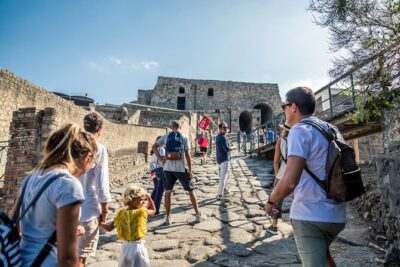
Priority Access Pompeii & Mt. Vesuvius Full day from Sorrento
Read our review →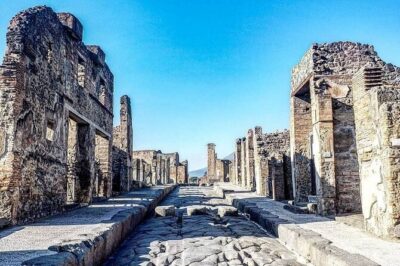
Pompeii Express Guided Tour by Train from Sorrento
Read our review →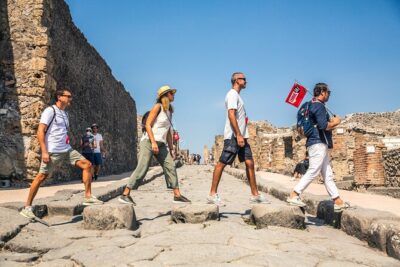
Skip-the-Line Pompeii Guided Tour from Sorrento
Read our review →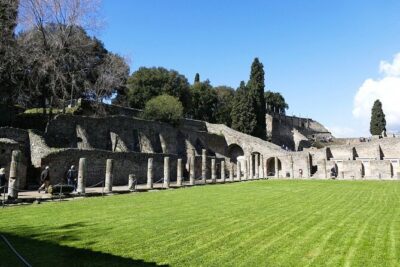
Pompeii Ruins Half-Day Tour from Sorrento with Guide
Read our review →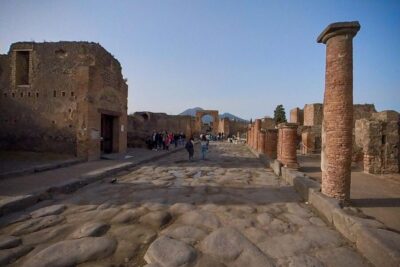
Browse the lists this tour appears in