
REVIEW · POMPEII TOURS
Private Pompeii Tour with Guide & Transfer included from Sorrento
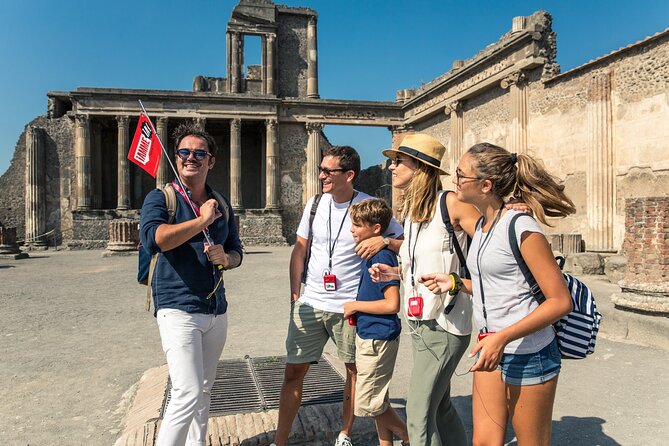
Pompeii is best understood on foot, but its streets, homes, temples, shops, and theaters cover a huge area. This private tour gives you a dedicated guide and a driver who handles the trip from Sorrento, so you can spend your energy on the ruins rather than on tickets, directions, or transport.
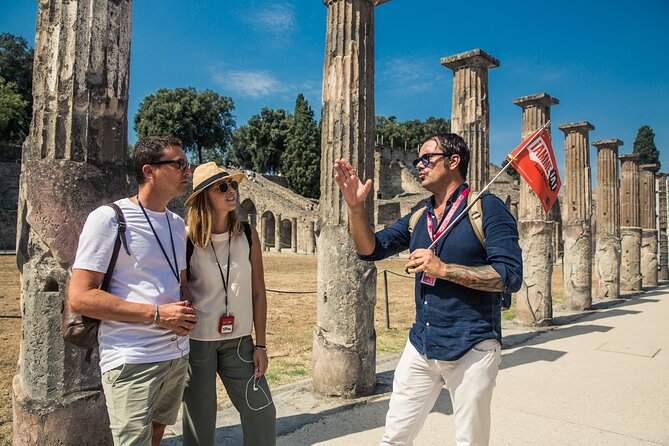
I like two things here. First, priority entry saves time at the ticket window. Second, a private guide can explain why a bakery, bathhouse, or public square mattered instead of leaving you to guess from a sign. Guide Vincenzo has been singled out for friendly, clear explanations and for taking visitors to quieter corners of the site.
The main drawback is the price: $504.67 per person is a serious outlay for a four-to-five-hour outing. Summer heat is another concern, especially on the exposed stone streets, so an early start, sunscreen, water, and sensible shoes matter.
Key points to know before booking
- Hotel pickup in the Sorrento area: A private vehicle takes you to and from Pompeii, though some hotels sit in pedestrian areas or behind traffic restrictions.
- About two hours with an official guide: The visit covers Pompeii’s major public buildings and several important homes.
- Priority access included: You bypass the ticket-window line, a useful benefit at a busy archaeological site.
- Private group only: You can ask questions, adjust the pace, and spend more time on subjects that interest you.
- Classic Pompeii highlights: Expect the Forum, Temple of Jupiter, Macellum, Via dell’Abbondanza, Stabian Baths, House of the Faun, Large Theater, and Basilica.
- Best for convenience: This works well for a first visit from Sorrento when you want transport and interpretation handled in one booking.
Leaving Sorrento by private vehicle
The day begins with pickup at your hotel or another agreed point in the Sorrento area. That sounds simple, and usually is, but Sorrento’s traffic controls and pedestrian streets can prevent a vehicle from reaching the front door of every property. Confirm the exact pickup location with the local provider at least 24 hours before departure.
The private vehicle is one of the tour’s strongest practical features. Reaching Pompeii from Sorrento on your own means sorting out public transport, finding the correct entrance, buying admission, and then facing the site without much help getting oriented. Here, an English-speaking driver handles the road while your guide waits to lead the archaeological visit.
The transfer also keeps the day tidy. With only four to five hours available, you do not want to spend part of the morning figuring out connections or searching for a ticket office. Food and drinks are not included, so plan around that. The supplied details do not specify a meal stop, and the focus is clearly the archaeological visit.
More Pompeii tours from Sorrento:
- Sorrento: Skip-the-Line Pompeii Express Tour by Train
★ 4.8 · 2,038 reviews - Priority Access Pompeii & Mt. Vesuvius Full day from Sorrento
★ 4.5 · 1,376 reviews - Pompeii Express Guided Tour by Train from Sorrento
★ 4.5 · 770 reviews
Why priority entry matters at Pompeii
Pompeii is not a small museum that you can understand in half an hour. The site includes broad streets, scattered homes, public buildings, temples, baths, theaters, and suburban roads. A priority ticket helps you get through the admission point without waiting at the ticket window, leaving more of your limited time for the ruins.
It does not mean that the whole archaeological park becomes private or empty. Other visitors will still be present, and Pompeii can feel crowded in the most famous areas. The real benefit is simpler: you start promptly and avoid wasting part of a short tour on admission formalities.
Your official guide provides the structure. In a place this large, that matters. Without a plan, it is easy to walk past an important building or spend too much time in one area before realizing how far you still have to go. A private format also lets you ask basic questions without worrying about holding up a large group.
The tour is described as a two-hour guided walk within a four-to-five-hour outing. That leaves time for the private transfer and the practical movement into and out of the site. Do not expect a full-day archaeological survey. Expect a concentrated first visit built around Pompeii’s best-known areas.
The Forum, Temple of Jupiter, and Macellum
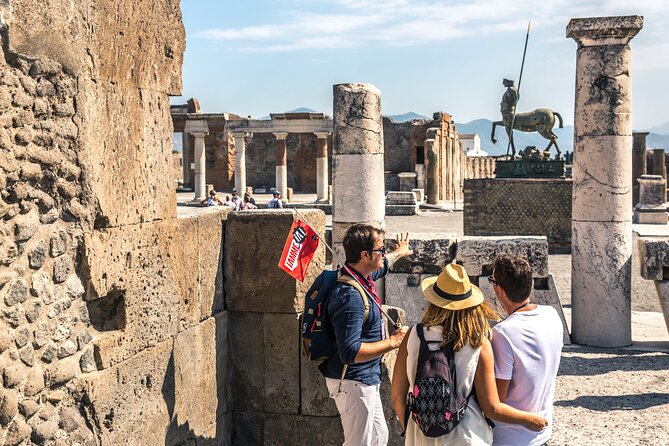
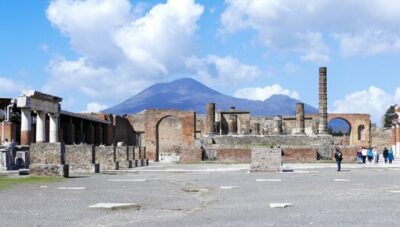
The Archaeological Park of Pompeii is the main stop, and the Civil Forum gives you the clearest starting point. This was the city’s public center, where administration, justice, commerce, markets, and religious life came together. It is not simply an open plaza. It helps you see how the city was organized and where public business took place.
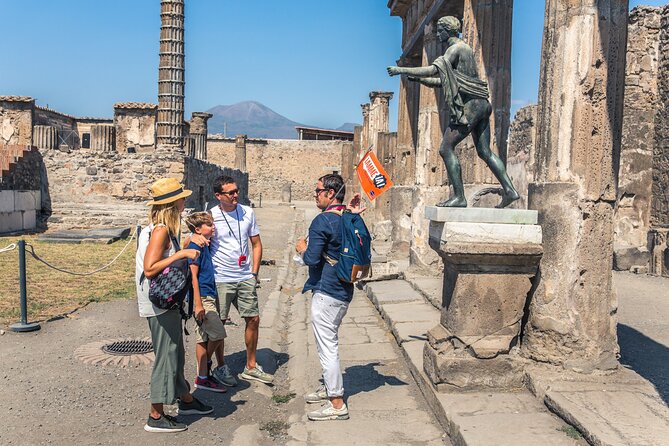
At the north end, the Temple of Jupiter frames the Forum. Its position also creates one of Pompeii’s memorable views, with Mount Vesuvius rising behind it. The temple became a Capitolium after the Roman colony was founded in 80 BC, with Jupiter, Juno, and Minerva honored in the Roman tradition.
This is a good place to ask your guide about the difference between a civic building and a religious building. The remains can look like disconnected walls unless someone explains their original role. A private tour gives you a better chance to stop when a question occurs rather than simply keeping pace with a crowd.
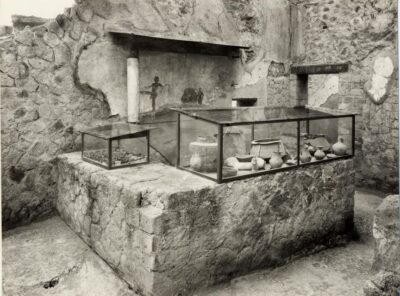
Next comes the Macellum, a market complex around a four-sided portico. The building included a raised area for worship, rooms linked to a sacred board, and a large room with a masonry counter that may have been used for selling fish. Copies of statues and fragments connected with imperial worship add another layer to the site.
The details here are easy to miss without explanation. The Macellum was not just a market in the modern sense. It also reflected public religion and the relationship between commerce and imperial power. Your guide’s commentary is particularly useful in places like this, where much of the meaning lies in how the rooms worked together.
Via dell’Abbondanza and the Stabian Baths
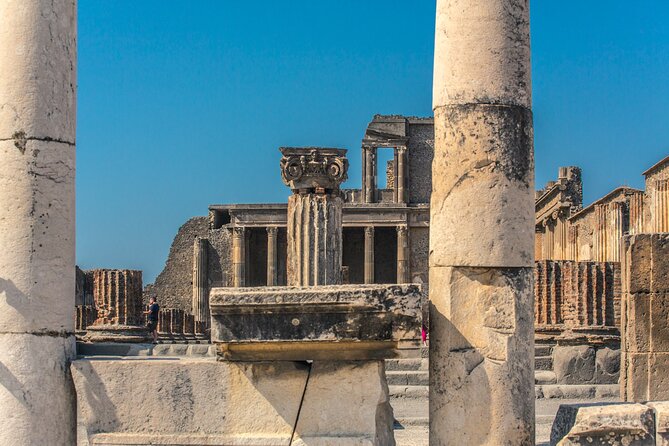
Via dell’Abbondanza was Pompeii’s main east-west street, running from the Forum toward the Porta Sarno. Its ancient shops, workshops, snack bars, and food counters make it one of the best places to picture ordinary urban life.
The street also helps balance the grand public buildings. Temples and basilicas tell you about power and civic order. Via dell’Abbondanza points toward daily routines: buying food, working in a shop, meeting people, and moving through a noisy commercial district.
The stones underfoot are uneven, and the site can be hot. Comfortable shoes are essential, not a minor suggestion. Wear sunscreen, especially in summer, when much of the walk is exposed. If heat affects you, tell your guide early so the pace can be managed within the private group.
The Stabian Baths offer a look at another side of Roman life. Men’s and women’s areas had separate entrances, and the men’s section included a changing room, a warm room, a cold room, and a hot room. The baths date to the period soon after the colony was founded by veterans under General Sulla in 80 BC.
The building also shows that Pompeii had already suffered serious damage before the eruption. The earthquake of AD 62 badly affected the baths and many other structures. That detail helps correct the common idea that every broken wall was caused by the eruption of Mount Vesuvius in AD 79.
More Private Transfers in Sorrento:
- From Sorrento: Positano and Amalfi Boat Trip with Transfer
★ 4.9 · 1,598 reviews - Capri Guided Boat Experience with Island Exploration and Transfer
★ 5.0 · 302 reviews - Private Tour of the Amalfi Coast from Sorrento with Driver
★ 5.0 · 269 reviews - Private Transfer from Sorrento to Naples
★ 5.0 · 268 reviews
The House of the Faun and Pompeii’s private side
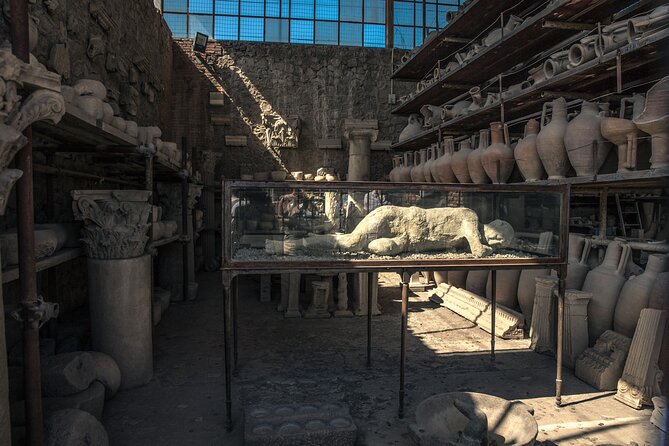
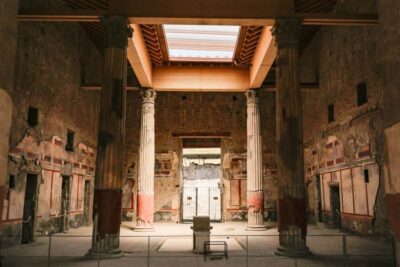
The House of the Faun was one of Pompeii’s largest private residences. Built in the second century BC, it represents the wealth and taste of an aristocratic Roman household better than many surviving homes.
Its importance is not only its size. The house helps you compare private life with the public spaces seen earlier in the day. The Forum belonged to civic business and public ceremony. Here, the layout points to status, entertaining, household organization, and the resources needed to maintain a grand residence.
A guide can make this stop much more useful by explaining what you are seeing beyond the name of the house. The residence held major works of art, and its plan reflects a high level of wealth during the Roman Republic. If you are interested in architecture or domestic life, ask for extra time here.
The private format is valuable at a house such as this because you may want to stop and discuss a detail while another person in your group is more interested in the theater or baths. There is no fixed large-group pace to follow. Still, with only about two hours of guided sightseeing, the guide must keep the visit moving.
The Large Theater and Basilica
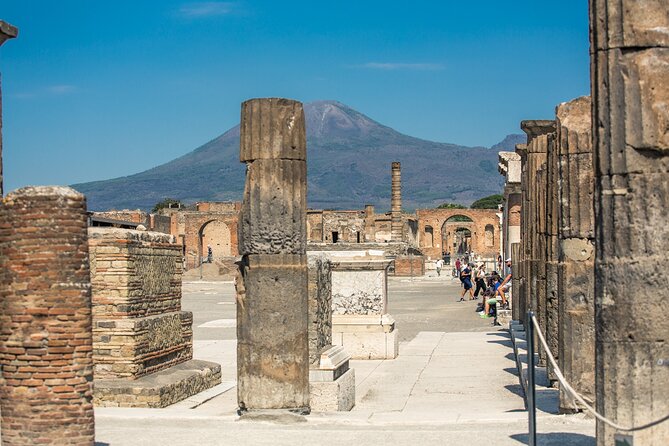
The Large Theater was built into a natural slope, using the terrain to form an auditorium divided into five sections. Performances included tragedies from the Greek and Roman traditions. The theater gives Pompeii a strong sense of public entertainment and reminds you that this was a functioning city, not merely a collection of houses.
The setting also changes the rhythm of the visit. After the tight streets and enclosed homes, the theater opens your view and shows how the Romans used the shape of the ground. You might find this stop especially appealing if you like ancient performance spaces, city planning, or the way architecture responds to its surroundings.
The Basilica brings you back to the Forum. At about 1,500 square meters, it was one of the Forum’s grandest buildings. Business took place here, along with the administration of justice.
These two stops show different forms of public life. The theater served cultural and social life. The Basilica supported commercial and legal affairs. Together with the Forum and Temple of Jupiter, they give you a useful picture of how civic activity worked across the city.
The supplied schedule assigns roughly ten minutes to several individual stops. That is enough for an introduction and a look around, but not enough for a long, scholarly examination of every building. If one place matters most to you, say so at the start. A private guide can shape the emphasis better than a large scheduled group can.
Via delle Ville and the Villa of the Mysteries
The route may also include Via delle Ville, the road outside Pompeii’s city walls leading from the Porto Ercolano gate toward the Villa of the Mysteries. This section offers a quieter change from the central streets.
The ancient road passes a necropolis lined with substantial tombs. That setting matters because it shows how the city’s edges were arranged. Pompeii did not end abruptly at a wall. Roads, burial areas, and suburban properties continued beyond the urban center.
The Villa of the Mysteries is known for its frescoes depicting Dionysian rites. The information provided for this experience presents it as the famous destination along the route, though the listed stop-by-stop schedule focuses mainly on the central archaeological areas. Ask your provider or guide before departure which sections are included on your date.
That point is worth clarifying because Pompeii tickets and routes can involve a great deal of walking. The name Villa of the Mysteries may sound like a guaranteed extended visit, but the published description does not give a separate visit length for it. Confirm the day’s exact path if the villa is a priority for you.
What the private format changes
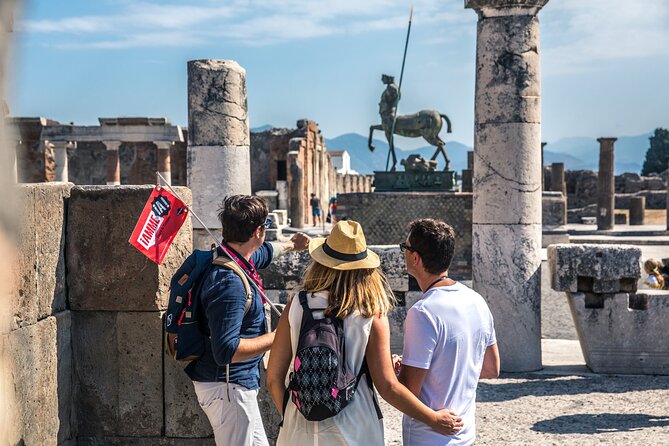
A private tour is not automatically better for every visitor. If you enjoy wandering alone, reading signs, and spending hours at a single house, you may prefer independent entry. But Pompeii rewards help with orientation, and the guide is the main reason to choose this option.
You can ask why a building mattered, what a room was used for, or how the earthquake and eruption affected the city. You can also request a slower pace in a favorite area, within the time available. The guide’s live commentary turns a walk among ruins into a connected story.
The strongest praise attached to this experience centers on the guide service and the transport. Vincenzo is specifically noted for friendly explanations, a strong grasp of Pompeii, and a route that included less-visited corners. That sort of route choice can make a real difference. The best moments at Pompeii are not always the largest monuments, but the smaller spaces where you can better picture daily life.
The vehicle also returns you to your Sorrento hotel area, removing the need to arrange a separate trip back. For a couple, family, or small group sharing the cost, that convenience may justify the higher price. At $504.67 per person, however, you should be certain that a private guide and door-to-door transport are worth more to you than a cheaper shared excursion or independent visit.
Timing, heat, and what to wear
The total experience lasts about four to five hours. The guided archaeological visit is about two hours, with the remaining time used for transport and the movement around the site. That makes it a practical choice if you have other plans in Sorrento later in the day.
Summer is the hardest season for this walk. Pompeii has broad exposed areas, pale stone that reflects heat, and few chances to escape the sun along the route. Comfortable shoes and sunscreen are specifically advised. Bring water, since food and beverages are not included.
An early morning departure is a smart choice in July and other hot months. The tour can arrange an early start, and that gives you cooler conditions as well as a better chance of reaching the site before the strongest heat. The exact departure time should be confirmed when you book.
The site is near public transportation, but that fact matters less here because private transport is included. Most people can participate, though the description does not provide detailed information about wheelchair access, the condition of every path, or the total walking distance. If mobility is a concern, ask the provider about the route before paying.
Who should book this Pompeii tour?
I would choose this experience if you are staying in Sorrento and want Pompeii handled in one neat half-day plan. It suits first-time visitors who want the major buildings explained, families who value a flexible pace, and anyone who dislikes wasting time on transport and ticket lines.
It is also a good match for people who want to ask questions. Pompeii has enough scale and detail to overwhelm a casual visit, and a private guide can help you focus on what interests you most.
I would hesitate if your main goal is the lowest possible price. The cost is high, and the guided visit is relatively short compared with the size of the site. Independent visitors who are comfortable with public transport and self-guided exploration may get more hours at Pompeii for less money.
Should you book it?
Book this tour if convenience, private attention, and clear interpretation matter more to you than finding the cheapest admission. The combination of Sorrento pickup, priority entry, an official English-speaking guide, and a return vehicle removes several common hassles.
Before booking, confirm the pickup point, ask which entrance and route will be used, and clarify whether Via delle Ville and the Villa of the Mysteries are part of your exact visit. Choose an early start in hot weather, wear sturdy shoes, and treat the $504.67 price as payment for transport and personal guiding as much as for entry to Pompeii itself.
The tour offers free cancellation up to 24 hours before the start time. After that point, the payment is not refunded, and changes made within 24 hours are not accepted.
FAQ
Where does the tour begin?
Pickup is offered from your hotel in the Sorrento area, or from another location confirmed with the local provider. Some hotels cannot be reached by vehicle because of traffic restrictions or pedestrian areas.
How long does the experience last?
The full experience lasts approximately four to five hours. The guided walk inside Pompeii lasts about two hours.
Is transportation included?
Yes. Private transportation with an English-speaking driver is included from and back to your hotel area in Sorrento.
Is Pompeii admission included?
Yes. Admission to the Pompeii Archaeological Site and priority access are included.
Is the guide private?
Yes. This is a private tour, so only your group participates. An expert local guide provides live commentary during the archaeological visit.
What language is offered?
The experience is offered in English, with an English-speaking driver and guide.
Are food and drinks included?
No. Food and beverages are not included.
Can I cancel for a full refund?
Yes, if you cancel at least 24 hours before the experience start time. Cancellations made less than 24 hours before departure are not refunded, and changes within that period are not accepted.
New on the Sorrento list
- Vico Equense: Authentic Cooking Class at a Local’s Home★ 5.0 · 4 reviews
- Vico Equense: Dining Experience at a Local’s Home★ 5.0 · 4 reviews
- Vico Equense: Tour in the dairy “Mozzarella Experience”★ 5.0 · 19 reviews
- Private tour of Amalfi Coast★ 5.0 · 71 reviews
- Private Virtual Cooking Class from Sorrento★ 5.0 · 25 reviews
- Private transfer from Salerno to the Amalfi Coast, or vice versa★ 5.0 · 30 reviews
- Sorrentomaxiboat tours to Capri★ 5.0 · 63 reviews
- Yoga Experience – Sorrento★ 5.0 · 29 reviews
Pompeii Tours, compared.
Priority Access Pompeii & Mt. Vesuvius Full day from Sorrento
Read our review →
Pompeii Express Guided Tour by Train from Sorrento
Read our review →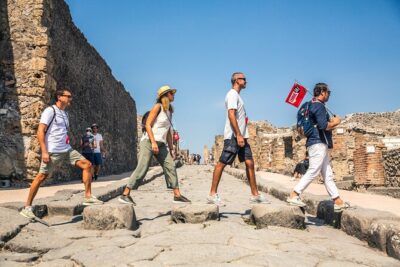
Skip-the-Line Pompeii Guided Tour from Sorrento
Read our review →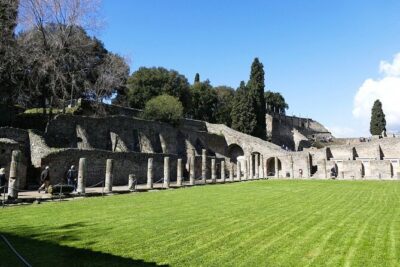
Pompeii Ruins Half-Day Tour from Sorrento with Guide
Read our review →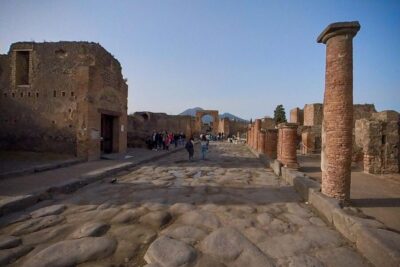
Browse the lists this tour appears in