
REVIEW · MASSA LUBRENSE TOURS
Discovery Tour of Sorrento Lemon in Massa Lubrense
The most interesting part of this two-hour visit is that you see the full life of a Sorrento lemon, from a bitter-orange seed in the nursery to a mature tree heavy with fruit. Rita Ruocco explains the work herself, then demonstrates the traditional grafting method used by her family.
I like the fresh lemonade and sugared lemon slices at the start, and I like the quiet viewing point where you can taste homemade liqueurs while looking across the Gulf of Naples. The main thing to consider is transport: the meeting point is near a bus stop, but you should confirm your exact arrangements, especially if you want a private pickup from Sorrento.
Key points to know before booking
- From seed to fruit: Follow bitter-orange seedbeds, mother plants, grafted trees, and mature citrus under traditional pergolas.
- Rita’s family farm: Rita Ruocco leads the visit, with family involvement and farming methods passed down through three generations.
- Sea views from Massa Lubrense: The farm looks over the Gulf of Naples, with views toward nearby islands and, on clear days, Naples.
- Tasting is part of the tour: Expect lemonade, lemon with sugar, limoncello, limoncello cream, marmalade, jam, and locally produced olive oil.
- A hands-on lesson: Rita shows how a citrus graft is made instead of simply describing the process.
- Good value for a short visit: At $54.07 per person for about two hours, the price includes a farm visit, instruction, views, and several tastings.
Why this lemon farm visit feels different
Sorrento’s lemons are more than a pretty souvenir. They are part of the food, farming, and visual character of the peninsula. Lemon trees grow beneath broad wooden and reed-covered pergolas, which protect them from weather and help create the shaded groves you see around Sorrento and Massa Lubrense.
This visit gives you a practical look at that tradition. You are not simply shown a row of mature trees and handed a bottle of limoncello. Rita explains how the plants are started, how they are joined together, and how much care is needed before a tree produces fruit.
That makes the experience a good choice if you want something slower and more personal than a standard tasting stop. You spend time outdoors, ask questions, see the farm’s working parts, and taste products made from the land around you.
The tour is led in English, and Rita’s clear, calm explanations make the technical parts easier to follow. Her passion for the family farm is a major part of the visit. This is not a polished museum presentation. It feels closer to being welcomed onto a working family property.
More walks and boats around Massa Lubrense:
- Like a local… in Massa Lubrense
★ 5.0 · 18 reviews - Transfer from Naples airport or station to Nerano (Massalubrense)
★ 5.0 · 6 reviews - Private Transfer from Massa Lubrense to Naples Airport, train Stations or Hotels
★ 5.0 · 4 reviews
Meeting Rita near the old cathedral
The published meeting point is at a bus stop near Chiesa ex Cattedrale di Santa Maria delle Grazie. Rita meets you there and takes you to the farm. The exact transport arrangement matters, so read the booking details carefully and confirm the meeting point before setting out.
Some bookings include a private service option, and private pickup is especially useful if you do not plan to reach the farm by bus. One important practical tip is to confirm whether your reservation includes transportation or only the farm visit. The property is in Massa Lubrense, above Sorrento, and the route itself offers attractive views as you climb.
The tour can accommodate up to 30 people, although some visits are arranged privately or for small groups. A larger group may feel less intimate than a private visit, particularly during the grafting demonstration or tasting. If personal attention is your priority, ask about the private option before paying.
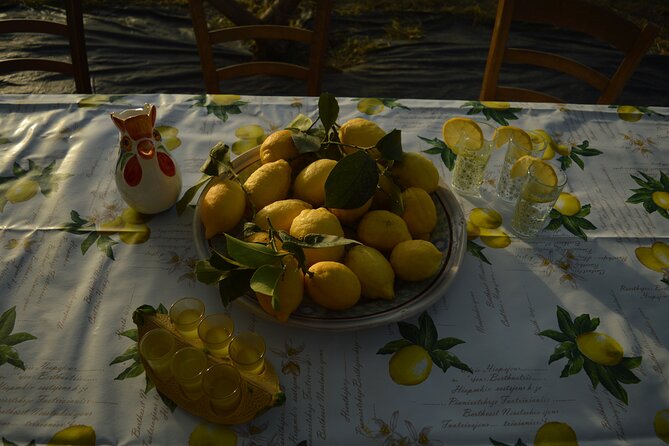
Once you arrive, the welcome is simple and generous. You begin with fresh lemonade and slices of lemon served with sugar. The lemon tasting is a useful introduction because it lets you notice the fruit’s sharpness and fragrance before seeing how it is grown.
Bitter oranges, mother plants, and the start of the process
The first farming lesson takes place in the seedbed. Bitter-orange seeds are planted to create the rootstock used for later citrus production. This is an important detail because the lemon tree you eventually see is not simply grown from a lemon seed and left alone.
The tour then moves to the field of mother plants, also called adult plants. These mature trees provide small twigs for grafting. Rita shows you how the farm selects and uses this material, linking the old trees with the next generation of plants.
This part gives you a better sense of the work behind a familiar product. A lemon tree may look natural and effortless once it is mature, but the farm’s method depends on timing, careful cutting, healthy plants, and years of attention.
You may also see other citrus varieties growing on the property. Rita explains differences between citrus trees and discusses how one tree can be used to produce three types of citrus fruit. The tour also covers the difference between male and female trees and the purposes they serve.
If you are interested in gardening, farming, or food production, this section may be the most rewarding part of the morning. If you mainly want photographs and tastings, the technical explanations will take up some of your limited two-hour visit, so keep that in mind.
The grafting demonstration makes the lesson practical
The grafting demonstration is the clearest part of the tour. Rita shows how a small piece from a mature plant is joined to a rootstock grown from bitter-orange seed. You see the process rather than hearing only a general explanation.
The method helps preserve the qualities of a chosen citrus plant. It also shows why traditional farming takes patience. The farm must grow the rootstock, maintain adult plants, prepare the graft, and care for the young tree before it reaches the fruit-producing stage.
This is where Rita’s family experience matters. Her family has worked the farm for three generations, and the tour connects that family knowledge with the physical work in front of you. Her father may take part in the demonstration, adding another link to the story of the property.
The farm includes an old lemon tree said to be about 82 years old. That tree gives the process a useful sense of time. You can compare a mature plant with the small grafted examples and understand that the fruit in your tasting glass represents years of growth.
More days out around Sorrento:
- Sorrento: Exclusive Capri Boat Tour and Optional Blue Grotto
★ 4.8 · 3,170 reviews - Sorrento Farm and Food Experience including Olive Oil, Limoncello, Wine tasting
★ 5.0 · 2,524 reviews - Capri Blue Grotto Small-Group Boat Day Tour From Sorrento
★ 4.5 · 2,511 reviews - From Sorrento/Nerano: Amalfi and Positano Boat Tour
★ 4.6 · 2,440 reviews
A panoramic pause over the Gulf of Naples
After the farming demonstration, the tour reaches a panoramic point. This is the time to slow down, take photographs, and enjoy the view toward the Gulf of Naples. Depending on visibility, you can see parts of the coast, nearby islands, and Naples.
The view is not an extra decoration added to the farm visit. It helps explain why Massa Lubrense feels different from central Sorrento. You are looking across a rural corner of the peninsula where citrus and olive cultivation sit above the water.
At this stop, Rita tells the story of how the lemon became part of the area’s farming tradition. You can also taste the farm’s liqueurs. Limoncello is the obvious highlight, but the tasting may include limoncello cream and other citrus products.
This is one of the best moments for photographs, but the weather matters. The experience requires good weather, and poor conditions can lead to a different date or a full refund. A cloudy day will not necessarily ruin the farm visit, but clear conditions make the coastal view much more rewarding.
Walking under the Sorrentine pergola
Before returning to the starting point, you walk beneath a typical Sorrentine pergola. These structures protect the trees and create a shaded passage through the orchard. They also help you understand the scale and shape of traditional lemon cultivation in the region.
The pergola is a useful contrast to the nursery and grafting areas. At the beginning of the visit, you see young plants and basic growing materials. Here, you see mature trees in the form most people picture when they think of Sorrento lemons.
The walk is not described as strenuous, and most people can take part. Still, this is an outdoor farm visit, not a paved indoor attraction. If you use a wheelchair or have difficulty walking on uneven ground, ask the provider about the route before booking. Service animals are allowed, and the experience is near public transportation.
The family setting also gives the walk a relaxed feel. Rita answers questions and adjusts the pace for the group. That personal contact is a strong reason to choose this visit over a larger commercial tasting stop.
The final tasting: jams, olive oil, and limoncello
Back at the starting point, the tasting continues with homemade products. Expect lemon and orange marmalade or jam, limoncello, limoncello cream, and extra virgin olive oil produced at the orchard.
The tastings are not just a chance to eat and drink. They show how the farm uses more than the fresh fruit itself. Citrus becomes marmalade and liqueur, while the same property also supports olive production.
The limoncello is likely to be the main draw for many people. Sorrento has no shortage of bottles for sale, but tasting a product made by the family who grows the fruit gives you more useful context. You can compare the drink with commercial versions you may have already tried and decide what you actually like.
The jams also make practical gifts. If you buy something, remember that liquids and jars need suitable packing for your journey home. The tour allows time to relax at the end rather than rushing straight back to the bus stop.
Is $54.07 a fair price?
At $54.07 per person, this is not the cheapest way to taste lemon products around Sorrento. You can buy lemonade, pastries, or limoncello in town for much less.
The value here comes from the complete visit. The price covers about two hours of instruction, access to a real family farm, the grafting demonstration, the citrus-growing story, the panoramic stop, and several tastings. You are paying for time and access, not just a drink.
I consider the price fair if you enjoy food, farming, or local traditions and want more than a quick photo stop. It is less convincing if you only want to sample limoncello or take a few pictures. In that case, a shop or short tasting in Sorrento may meet your needs at a lower cost.
The tour is also a useful break from crowded town streets. You trade some convenience for a quieter setting and a clearer sense of how local products are made.
Who should book this experience?
I would recommend this visit to couples, families, small groups, and anyone interested in food production. Children are welcome, and the process of grafting can give younger visitors something concrete to watch. The fruit tastings also make the subject easy to connect with.
It works well for honeymooners and for people seeking a personal activity after spending time in Sorrento’s busy center. You can learn something, take photographs, and enjoy a relaxed conversation with a local family.
It may not suit you if you want a fast, highly organized sightseeing tour with many locations. The visit focuses on one farm and one family’s methods. That is its strength, but it also means the experience depends on your interest in citrus farming.
The English presentation is useful for international visitors. Communication with Rita is handled directly, and the meeting arrangements should be confirmed before the day of the tour.
Timing, group size, and weather
The visit lasts about two hours. That is long enough to cover the nursery, adult plants, grafting, pergola, panoramic point, and tastings without taking up a full day.
The maximum group size is 30. A group that size may feel less personal, while a private booking can offer more time for questions and a more flexible pace. If you are booking for a special occasion or want a private pickup, check the available option rather than assuming it is included.
Good weather is required. If the operator cancels because of poor weather, you can choose another date or receive a full refund. For your own plans, avoid scheduling this as the only activity before an important departure, since transportation and weather can affect the timing.
Free cancellation is available until 24 hours before the start time. Cancelling later or making changes within that final 24-hour period does not qualify for a refund.
Should you book the Sorrento lemon tour?
Book it if you want to understand why Sorrento lemons matter, meet Rita and her family, and see the work behind the fruit and liqueur. The strongest parts are the seed-to-fruit explanation, the hands-on grafting lesson, the farm views, and the generous tasting at the end.
Before booking, confirm the meeting point and transportation. Choose the private service option if you need a ride from Sorrento or want a more personal visit.
Skip it if you only want a quick limoncello tasting or prefer a city-based activity. For everyone else, this is a pleasant and useful way to spend two hours in Massa Lubrense, with enough substance to make the price worthwhile.
FAQ
How long does the Discovery Tour of Sorrento Lemon last?
The tour lasts approximately two hours.
Where does the tour take place?
The farm is in Massa Lubrense near Sorrento, Italy. The meeting point is at a bus stop near Chiesa ex Cattedrale di Santa Maria delle Grazie.
Who leads the tour?
The experience is provided by Rita Ruocco. She is a third-generation lemon farmer and leads the explanation of the family farm and citrus-growing process.
Is the tour offered in English?
Yes. The tour is offered in English.
What will I see on the farm?
You will see bitter-orange seedbeds, adult or mother plants, grafted citrus plants, mature trees, and a traditional Sorrentine pergola.
Is there a grafting demonstration?
Yes. Rita shows how a graft is made and explains how young plants develop into fruit-producing trees.
What food and drink is included?
The experience includes lemonade, lemon slices with sugar, liqueur tastings, jams or marmalade, and tastings of products such as limoncello, limoncello cream, and extra virgin olive oil.
Can children take part?
Yes. Children are welcome, and most people can participate.
Is transportation included?
The meeting is near public transportation, but you should confirm the exact transportation arrangements for your booking. A private service option is available for those who need a ride directly there.
What happens if the weather is bad?
The experience requires good weather. If it is cancelled because of poor weather, you can receive a full refund or choose another date. Free cancellation is also available up to 24 hours before the start time.
New on the Sorrento list
- Vico Equense: Authentic Cooking Class at a Local’s Home★ 5.0 · 4 reviews
- Vico Equense: Dining Experience at a Local’s Home★ 5.0 · 4 reviews
- Vico Equense: Tour in the dairy “Mozzarella Experience”★ 5.0 · 19 reviews
- Private tour of Amalfi Coast★ 5.0 · 71 reviews
- Private Virtual Cooking Class from Sorrento★ 5.0 · 25 reviews
- Sorrentomaxiboat tours to Capri★ 5.0 · 63 reviews
- Private transfer from Salerno to the Amalfi Coast, or vice versa★ 5.0 · 30 reviews
- Yoga Experience – Sorrento★ 5.0 · 29 reviews
Massa Lubrense Tours, compared.


Transfer from Naples airport or station to Nerano (Massalubrense)
Read our review →
Browse the lists this tour appears in